
Международный эндокринологический журнал Том 22, №2, 2026
Вернуться к номеру
Національний консенсус експертів з питань прискореного старіння та метаболічного здоров’я
Авторы: Крістіан (Манжалій) Е.Г. (1), Досенко В.Є. (2), Кобиляк Н.М. (1), Голубничий О.С. (3)
(1) - Національний медичний університет імені О.О. Богомольця, м. Київ, Україна
(2) - Інститут фізіології імені О.О. Богомольця НАН України, м. Київ, Україна
(3) - Співзасновник та член координаційної ради Національного консенсусу
Рубрики: Эндокринология
Разделы: Справочник специалиста
Версия для печати
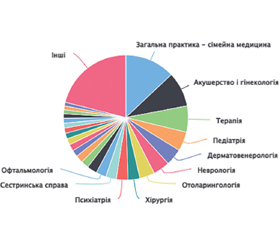
Актуальність. Національний консенсус із прискореного старіння та метаболічного здоров’я став першим масштабним кроком до формування державної стратегії у цій галузі, об’єднавши понад 3,3 тис. лікарів різних спеціальностей. Мета: представити результати першого Національного консенсусу з прискореного старіння та метаболічного здоров’я (Київ, 20–21 лютого 2025 р.) та сформулювати науково обґрунтовані підходи до створення національного протоколу менеджменту прискореного старіння та метаболічного здоров’я. Матеріали та методи. Проведено анкетування 3395 лікарів з усіх регіонів України. Опитувальник містив 51 питання у чотирьох блоках: визначення старіння, довголіття та метаболічного здоров’я, методи діагностики, біомаркери, профілактичні та терапевтичні втручання. Застосовано описову статистику для аналізу даних. Результати. 88,5 % респондентів розглядають старіння як фізіологічний процес, а не хворобу. 91,3 % підтримали концепцію «здорового довголіття». Найбільшу підтримку мали такі методи: біохімічні аналізи, функціональні тести, теломерний та епігенетичний аналіз, дослідження мікробіому. Серед втручань чільне місце займають збалансоване харчування (83,8 %), фізична активність (80,1 %), психічне здоров’я (87,8 %), своєчасна медична допомога (89,2 %). Фармакологічні та клітинні технології (сенолітики, стовбурові клітини) підтримує помірна кількість лікарів. Особливістю консенсусу є вплив війни, який прискорює старіння через хронічний стрес, травматичні події та соціальну нестабільність. Це зумовлює потребу у включенні психосоціальних інтервенцій до національного протоколу. Розробка та впровадження протоколу довголіття в Україні може мати подвійний ефект: покращення якості життя громадян і підвищення демографічної стійкості нації. Подальші кроки повинні включати стандартизацію діагностичних методів, підготовку лікарів до роботи з новими технологіями, розвиток міждисциплінарних досліджень і міжнародне партнерство у сфері геронтології та біомедицини. Висновки. Консенсус підтверджує необхідність створення національної стратегії довголіття та метаболічного здоров’я в Україні, що інтегруватиме превентивні, медико-біологічні та психосоціальні підходи. Розробка протоколу може стати основою для підвищення здоров’я населення, посилення стійкості до наслідків війни та подолання демографічної кризи.
Background. The National Consensus on Accelerated Aging and Metabolic Health was the first large-scale step towards the formation of a state strategy in this area, uniting more than 3.3 thousand doctors of different specialties. The purpose of the study was to present the results of the First National Consensus on Accelerated Aging and Metabolic Health (Kyiv, February 20–21, 2025) and to formulate scientifically based approaches to creating a national protocol on the accelerated aging and metabolic health. Materials and methods. A survey of 3395 doctors from all regions of Ukraine was conducted. The questionnaire contained 51 questions in four blocks: definition of aging, longevity and metabolic health, diagnostic methods, biomarkers, preventive and therapeutic interventions. Descriptive statistics were used to analyze the data. Results. 88.5 % of respondents consider aging as a physiological process, not a disease. 91.3 % supported the concept of “healthy longevity”. The following methods received the greatest support: biochemical analyses, functional tests, telomere and epigenetic analysis, microbiome research. Among the interventions, the leading place is occupied by balanced nutrition (83.8 %), physical activity (80.1 %), mental health (87.8 %), timely medical care (89.2 %). Pharmacological and cellular technologies (senolytics, stem cells) are supported by a moderate share of doctors. A feature of the consensus is the impact of war, which accelerates aging due to chronic stress, traumatic events, and social instability. This necessitates the inclusion of psychosocial interventions in the national protocol. The development and implementation of a longevity protocol in Ukraine can have a dual effect: improving the quality of life of citizens and increasing the demographic stability of the nation. Further steps should include standardization of diagnostic methods, training of doctors to work with new technologies, development of interdisciplinary research, and international partnerships in the field of gerontology and biomedicine. Conclusions. The consensus confirms the need to create a national strategy for longevity and metabolic health in Ukraine, which will integrate preventive, biomedical and psychosocial approaches. The development of the protocol can become the basis for improving the health of the population, resilience to the consequences of war and overcoming the demographic crisis.
вік-асоційовані захворювання; цукровий діабет 2-го типу; ожиріння; метаболічне здоров’я; тривалість життя; прискорене старіння; медицина довголіття; епігенетичний годинник
age-associated diseases; type 2 diabetes; obesity; metabolic health; life expectancy; accelerated aging; longevity medicine; epigenetic clock
Для ознакомления с полным содержанием статьи необходимо оформить подписку на журнал.
- Short E; ICCARP; Calimport S, Bentley B. Defining an ageing-related pathology, disease or syndrome: International Consensus Statement. Geroscience. 2025;47(2):1713-1720. doi: 10.1007/s11357-024-01315-9. Epub 2024 Sep 21. PMID: 39304617; PMCID: PMC11978578.
- Perri G, French C, Agostinis-Sobrinho C, Anand A, Antarianto RD, Arai Y, et al. An Expert Consensus Statement on Biomarkers of Aging for Use in Intervention Studies. J Gerontol A Biol Sci Med Sci. 2025;80(5):glae297. doi: 10.1093/gerona/glae297. PMID: 39708300; PMCID: PMC11979094.
- Yasenok V, Baumer AM, Petrashenko V, Kaufmann M, Frei A, Rüegger S, et al. Mental health burden of persons living in Ukraine and Ukrainians displaced to Switzerland: the mental health assessment of the Ukrainian population (MAP) studies. BMJ Glob Health. 2025;10(8):e019557. doi: 10.1136/bmjgh-2025-019557. PMID: 40789716; PMCID: PMC12352151.
- Rudnicka E, Napierała P, Podfigurna A, Męczekalski B, Smolarczyk R, Grymowicz M. The World Health Organization (WHO) approach to healthy ageing. Maturitas. 2020;139:6-11. doi: 10.1016/j.maturitas.2020.05.018. Epub 2020 May 26. PMID: 32747042; PMCID: PMC7250103.
- Bautmans I, Knoop V, Amuthavalli Thiyagarajan J, Maier AB, Beard JR, et al. WHO Working Group on Vitality Capacity. WHO working definition of vitality capacity for healthy longevity monitoring. Lancet Healthy Longev. 2022;3(11):e789-e796. doi: 10.1016/S2666-7568(22)00200-8. PMID: 36356628; PMCID: PMC9640935.
- Ferrucci L, Barzilai N, Belsky DW, Gladyshev VN. How to measure biological aging in humans. Nat Med. 2025;31(4):1057. doi: 10.1038/s41591-025-03550-9. PMID: 40011691; PMCID: PMC12380361.
- Xu J, Zhou H, Wang Z. Accelerated biological aging media–tes the associations of stress hyperglycemia ratio (SHR) with mortality in type 2 diabetes and obesity (diabesity). Cardiovasc Diabetol. 2025;24(1):368. doi: 10.1186/s12933-025-02931-1. PMID: 41024102; PMCID: PMC12481859.
- Sulaieva O, Yerokhovych V, Zemskov S, Komisarenko I, Guria–nov V, Pankiv V, et al. The impact of war on people with type 2 diabetes in Ukraine: a survey study. EClinicalMedicine. 2024;79:103008. doi: 10.1016/j.eclinm.2024.103008. PMID: 39791105; PMCID: PMC11714670.
- Mathur A, Taurin S, Alshammary S. New insights into methods to measure biological age: a literature review. Front Aging. 2024;5:1395649. doi: 10.3389/fragi.2024.1395649. PMID: 39743988; PMCID: PMC11688636.
- Antza C, Gallo A, Boutari C, Ershova A, Gurses KM, Lewek J, et al. Prevention of cardiovascular disease in young adults: Focus on gender differences. A collaborative review from the EAS Young Fellows. Atherosclerosis. 2023;384:117272. doi: 10.1016/j.atherosclerosis.2023.117272. Epub 2023 Sep 19. PMID: 37734996.
- Chen R, Wang Y, Zhang S, Bulloch G, Zhang J, Liao H, Shang X. et al. Biomarkers of ageing: Current state-of-art, challenges, and opportunities. MedComm — Future Medicine. 2023;2(2):Article e50. https://doi.org/10.1002/mef2.50
- Cohen JL, Goodman GJ, De Almeida AT, Jones D, Carruthers J, Grimes PE, et al. Decades of beauty: Achieving aesthetic goals throughout the lifespan. J Cosmet Dermatol. 2023;22(11):2889-2901. doi: 10.1111/jocd.15968. Epub 2023 Aug 26. PMID: 37632289.
- DiLoreto R, Murphy CT. The cell biology of aging. Mol Biol Cell. 2015;26(25):4524-31. doi: 10.1091/mbc.E14-06-1084. PMID: 26668170; PMCID: PMC4678010.
- Dubossarska ZM, Dubossarska YO, Grek LP, Radchenko VV. Concept of complications of reproductive aging in women for anti-aging therapy. Literature review. Reproductive endocrinology. 2020;54:32-38. https://doi.org/10.18370/2309-4117.2020.54.32-38.
- Dugani SB, Moorthy MV, Li C, Demler OV, Alsheikh-Ali AA, Ridker PM, Glynn RJ, Mora S. Association of Lipid, Inflammatory, and Metabolic Biomarkers With Age at Onset for Incident Coronary Heart Disease in Women. JAMA Cardiol. 2021;6(4):437-447. doi: 10.1001/jamacardio.2020.7073. PMID: 33471027; PMCID: PMC7818181.
- Patrizio E, Calvani R, Marzetti E, Cesari M. Physical Functional Assessment in Older Adults. J Frailty Aging. 2021;10(2):141-149. doi: 10.14283/jfa.2020.61. PMID: 33575703.
- Gianfredi V, Nucci D, Pennisi F, Maggi S, Veronese N, Soysal P. Aging, longevity, and healthy aging: the public health approach. Aging Clin Exp Res. 2025;37(1):125. doi: 10.1007/s40520-025-03021-8. PMID: 40244306; PMCID: PMC12006278.
- Gomes NM, Ryder OA, Houck ML, Charter SJ, Walker W, Forsyth NR, et al. Comparative biology of mammalian telomeres: hypotheses on ancestral states and the roles of telomeres in longevity determination. Aging Cell. 2011;10(5):761-8. doi: 10.1111/j.1474-9726.2011.00718.x. Epub 2011 Jun 1. PMID: 21518243; PMCID: PMC3387546.
- Horvath S, Erhart W, Brosch M, Ammerpohl O, von Schönfels W, Ahrens M, et al. Obesity accelerates epigenetic aging of human liver. Proc Natl Acad Sci USA. 2014;111:1553-43. doi: 10.1073/pnas.1412759111.
- Hu FB. Diet strategies for promoting healthy aging and longevity: An epidemiological perspective. J Intern Med. 2024;295(4):508-531. doi: 10.1111/joim.13728. Epub 2023 Oct 23. PMID: 37867396; PMCID: PMC10939982.
- Hullon D, Janiec K, Florova V, Trach A, Volkova Y, Mnevets R. Glucagon-like peptide-1 receptor agonists and obesity para–dox in heart failure with preserved ejection fraction: a systema–tic review. Cardiovasc Endocrinol Metab. 2025;14(4):e00344. doi: 10.1097/XCE.0000000000000344. PMID: 40978810; PMCID: PMC12445413.
- Dorling JL, Martin CK, Redman LM. Calorie restriction for enhanced longevity: The role of novel dietary strategies in the pre–sent obesogenic environment. Ageing Res Rev. 2020;64:101038. doi: 10.1016/j.arr.2020.101038. Epub 2020 Feb 25. PMID: 32109603; PMCID: PMC9036399.
- Jin K, Simpkins JW, Ji X, Leis M, Stambler I. The Critical Need to Promote Research of Aging and Aging-related Diseases to Improve Health and Longevity of the Elderly Population. Aging Dis. 2014;6(1):1-5. doi: 10.14336/AD.2014.1210. PMID: 25657847; PMCID: PMC4306469.
- Kaplan RM, Milstein A. Contributions of Health Care to Longevity: A Review of 4 Estimation Methods. Ann Fam Med. 2019;17(3):267-272. doi: 10.1370/afm.2362. PMID: 31085531; PMCID: PMC6827626.
- López-Otín C, Blasco MA, Partridge L, Serrano M, Kroe–mer G. The hallmarks of aging. Cell. 2013;153(6):1194-217. doi: 10.1016/j.cell.2013.05.039. PMID: 23746838; PMCID: PMC3836174.
- Richardson M, Richardson DR. Pharmacological Targeting of Senescence with Senolytics as a New Therapeutic Strategy for Neurodegeneration. Mol Pharmacol. 2024;105(2):64-74. doi: 10.1124/molpharm.123.000803. PMID: 38164616.
- Silva N, Rajado AT, Esteves F, Brito D, Apolónio J, Roberto VP, Binnie A, et al. ALFAScore Consortium. Measuring healthy ageing: current and future tools. Biogerontology. 2023;24(6):845-866. doi: 10.1007/s10522-023-10041-2. Epub 2023 Jul 13. PMID: 37439885; PMCID: PMC10615962.
- Nemati M, Omrani GR, Ebrahimi B, Montazeri-Najafabady N. The Beneficial Effects of Probiotics via Autophagy: A Systematic Review. Biomed Res Int. 2021;2021:2931580. doi: 10.1155/2021/2931580. PMID: 34901266; PMCID: PMC8664546.
- Gensous N, Sala C, Pirazzini C, Ravaioli F, Milazzo M, Kwiat–kowska KM, et al. A Targeted Epigenetic Clock for the Prediction of Biological Age. Cells. 2022;11(24):4044. doi: 10.3390/cells11244044. PMID: 36552808; PMCID: PMC9777448.
- Parizad R, Batta A, Hatwal J, Taban-Sadeghi M, Mohan B. Emerging risk factors for heart failure in younger populations: A gro–wing public health concern. World J Cardiol. 2025;17(4):104717. doi: 10.4330/wjc.v17.i4.104717. PMID: 40308622; PMCID: PMC12038706.
- Pisaruk A, Asanov E, Naskalova S, Antoniuk-Shcheglova I, Bondarenko O, Dyba I, et al. Effects of war-related stress on the cardio–vascular system, metabolism and the rate of ageing in women. Ageing and Longevity. 2024;5(1):21-28. https://doi.org/10.47855/jal9020-2024-5-3/.
- Puri D, Wagner W. Epigenetic rejuvenation by partial reprogramming. Bioessays. 2023;45(4):e2200208. doi: 10.1002/bies.202200208. Epub 2023 Mar 4. PMID: 36871150.
- Tamura R, Toda M. Historic Overview of Genetic Engineering Technologies for Human Gene Therapy. Neurol Med Chir (Tokyo). 2020;60(10):483-491. doi: 10.2176/nmc.ra.2020-0049. Epub 2020 Sep 8. PMID: 32908085; PMCID: PMC7555159.
- Tatarchuk T, Todurov I, Anagnostis P, Tutchenko T, Pedachenko N, Glamazda M, et al. The Effect of Gastric Sleeve Resection on Menstrual Pattern and Ovulation in Premenopausal Women with Classes III-IV Obesity. Obesity surgery. 2022;32(3):599-606. https://doi.org/10.1007/s11695-021-05820-0/.
- Veerman L, Tarp J, Wijaya R, et al Physical activity and life expectancy: a life-table analysis. British Journal of Sports Medi–cine. 2025;59:333-338. https://doi.org/10.1136/bjsports-2024-108125.