
Журнал «Медицина неотложных состояний» Том 22, №2, 2026
Вернуться к номеру
Сучасні модифікації методик регіонарної анестезії під час артроскопії колінного суглоба
Авторы: Савчук Т.В. (1, 2), Дзюба Д.О. (1, 3, 4)
(1) - Національний медичний університет імені О.О. Богомольця, м. Київ, Україна
(2) - ДУ «Інститут травматології та ортопедії НАМН України», м. Київ, Україна
(3) - Київська обласна клінічна лікарня, м. Київ, Україна
(4) - Вишгородська центральна районна лікарня, м. Вишгород, Київська обл., Україна
Рубрики: Медицина неотложных состояний
Разделы: Клинические исследования
Версия для печати
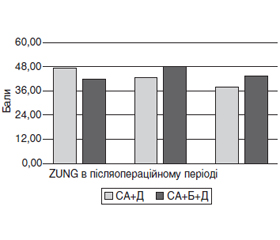
Актуальність. Періопераційний контроль болю під час артроскопії колінного суглоба є серйозною проблемою як для хірургів, так і для анестезіологів. Спинномозкова анестезія є безпечним і надійним методом анестезії з перевагами швидкого початку дії, забезпечує кращий контроль болю, є простою у виконанні та економічно ефективною. Додавання блокад стегнового та сідничного нерва до спинномозкової анестезії полегшує післяопераційний біль та зберігає діапазон рухів, що свідчить про потенційні клінічні переваги в лікуванні болю та функціональному відновленні. З нових допоміжних засобів місцевої анестезії дексмедетомідин найкраще продемонстрував здатність значно збільшувати тривалість блокад. Дослідження правильної дози як ад’юванту при блокаді периферичних нервів, ефективності дексмедетомідину за часом та інтенсивністю знеболювання виглядає перспективним. Мета: порівняння ефективності та безпеки модифікованої спінальної анестезії з використанням ад’юванту дексмедетомідину (СА+Д) з комбінованою модифікованою регіонарною анестезією (унілатеральна спінальна анестезія з блокадою стегнового та сідничного нерва і малими дозами р-ну дексмедетомідину, СА+Б+Д). Матеріали та методи. Дві групи по 40 пацієнтів в кожній, пацієнти обох статей, з травмою передньої хрестоподібної зв’язки, яким проводилась артроскопічна пластика передньої хрестоподібної зв’язки колінного суглоба. Перша група (СА+Д): вік 40,73 ± 9,99 року, I–II клас за ASA. Друга група (СА+Б+Д): вік 39,00 ± 11,56 року, I–II клас за ASA. Група СА+Д (40 пацієнтів) отримувала ізобаричний р-н бупівакаїну 0,5% 13 мг та дексмедетомідин 100 мкг інтратекально, група СА+Б+Д (40 пацієнтів) — інтратекально вводили ізобаричний р-н бупівакаїну 0,5% 8 мг та фентанілу 20 мкг, для блокади стегнового та сідничного нерва застосовували бупівакаїну 0,25% по 20 мл, дексмедетомідин 100 мкг. Періопераційно проводився аналіз та порівняння гемодинамічних показників (АТ сист., АТ діаст., пульс), динаміки маркерів стресу: рівня кортизолу, лактату та глюкози крові; антиноцицептивного захисту: ВАШ, числова рейтингова шкала болю (NRS); показників психоемоційного комфорту — шкала Zung, шкала HADS; наявності побічні ефектів та ускладнень у пацієнтів обох досліджуваних груп. Результати. Помірна гіпертензія у пацієнтів групи СА+Д (127,88 ± 10,43 мм рт.ст.) відмічена на 8-й годині післяопераційного періоду, у групі СА+Б+Д (128,98 ± 12,73 мм рт.ст.) — на 12-й годині післяопераційного періоду (p < 0,001). Суттєвих розбіжностей між середніми показниками сатурації обох груп пацієнтів виявлено не було (p < 0,05). Рівень глікемії після операції у пацієнтів групи СА+Д більший (5,17 ± 0,56 ммоль/л) порівняно з групою СА+Б+Д (4,82 ± 0,44 ммоль/л) (p < 0,02). Оцінка за ВАШ була нижчою в групі СА+Б+Д через 4, 8, 12, 24 години (p < 0,001). Оцінка за шкалою Zung була нижчою в групі СА+Б+Д через 4, 8 годин (p < 0,04). У групі СА+Д була вища частота виникнення вираженого больового синдрому, гіпотензії та тахікардії, післяопераційної нудоти, у групі СА+Б+Д післяопераційна нудота не спостерігалася. Висновки. 1. СА+Б+Д забезпечує кращий контроль гемодинамічних показників (p < 0,05), стабільні рівні глюкози (p < 0,02), лактату (p < 0,001) та кортизолу (p < 0,05) в плазмі крові періопераційно порівняно із СА+Д. 2. Застосування СА+Б+Д порівняно із СА+Д пов’язане з відстроченням появи перших больових відчуттів до 8–12 годин (p < 0,05) та нижчими показниками гострого післяопераційного болю (p < 0,02). 3. Комбінована модифікована регіонарна анестезія з блокадою стегнового та сідничного нерва і дексмедетомідином у дозі 100 мкг може бути анестезією вибору при артроскопічній пластиці передньої хрестоподібної зв’язки.
Background. Perioperative pain control during knee arthroscopy is a major challenge for both surgeons and anaesthesiologists. Spinal anaesthesia is a safe and reliable method with the advantages of rapid onset of action, it provides better pain control and is easy to perform and cost-effective method. Adding femoral and sciatic nerve blocks to spinal anaesthesia improves postoperative pain relief and maintains range of motion, suggesting potential clinical benefits in pain management and functional recovery. Of the new local anaesthesia aids, dexmedetomidine best demonstrated the ability to significantly increase the duration of blocks. Examination of the correct dose as an adjuvant in peripheral nerve block, efficacy of dexmedetomidine in time and intensity of analgesia seems promising. The purpose of the study: to compare the effectiveness and safety of modified spinal anaesthesia using dexmedetomidine adjuvant (SA+D) with combined modified regional anaesthesia (unilateral spinal anaesthesia with femoral and sciatic nerve block using small doses of dexmedetomidine solution, SA+B+D). Materials and methods. Two groups of 40 patients each, both men and women, who underwent arthroscopic repair for the anterior cruciate ligament injury. First group (SA+D): age of 40.73 ± 9.99 years, ASA I–II. Second group (SA+B+D): age of 39.00 ± 11.56 years, ASA I–II. The SA+D group received the isobaric solution of 0.5% bupivacaine 13 mg and dexmedetomidine 100 μg intrathecally, the SA+B+D group was intrathecally administered the isobaric solution of 0.5% bupivacaine 8 mg and fentanyl 20 μg; for femoral and sciatic nerve block, 0.25% bupivacaine 20 ml, dexmedetomidine 100 μg each were used. Both groups underwent the perioperative analysis and comparison of hemodynamic indicators (systolic and diastolic blood pressure, pulse), dynamics of stress markers: level of cortisol, lactate and blood glucose, antinociceptive protection: visual analogue scale (VAS), numeric rating scale of pain (NRS), indicators of psycho-emotional comfort: Zung Self-Rating Depression Scale, Hospital Anxiety and Depression Scale, presence of side effects and complications. Results. Moderate hypertension in patients of the SA+D group (127.88 ± 10.43 mmHg) was noted at the 8th hour of the postoperative period, in the SA+B+D group (128.98 ± 12.73 mmHg) — at the 12th hour (p < 0.001). No significant discrepancies were found between the mean saturation scores in both groups (p < 0.05). Post-surgery glycemia in patients of the SA+D group is greater (5.17 ± 0.56 mmol/l) than in the SA+B+D group (4.82 ± 0.44 mmol/l) (p < 0.02). The VAS score was lower in the SA+B+D group at 4, 8, 12, 24 hours (p < 0.001). The Zung scale score was lower in the SA+B+D group at 4, 8 hours (p < 0.04). In the SA+D group, there was a higher frequency of severe pain syndrome, hypotension and tachycardia, postoperative nausea, in the SA+B+D group, postoperative nausea was not observed. Conclusions. 1. SA+B+D provides better control of hemodynamic parameters (p < 0.05), stable plasma levels of glucose (p < 0.02), lactate (p < 0.001) and cortisol (p < 0.05) perioperatively than SA+D. 2. The use of SA+B+D, compared to SA+D, is associated with a delayed onset of first pain sensations up to 8–12 hours (p < 0.05) and lower rates of acute postoperative pain (p < 0.02). 3. Combined modified regional anaesthesia with femoral and sciatic nerve block using dexmedetomidine at a dose of 100 µg may be the anaesthesia of choice in arthroscopic repair of the anterior cruciate ligament.
спінальна анестезія; ад’ювант дексмедетомідин; периферична блокада стегнового та сідничного нервів; артроскопія; передня хрестоподібна зв’язка
spinal anaesthesia; adjuvant dexmedetomidine; peripheral femoral and sciatic nerve block; arthroscopy; anterior cruciate ligament
Для ознакомления с полным содержанием статьи необходимо оформить подписку на журнал.
- Cansian J.M. et al. The efficacy of buprenorphine compared with dexmedetomidine in spinal anesthesia: a systematic review and meta-analysis. Brazilian Journal of Anesthesiology. 2024. Vol. 74. P. 844557.
- Wu Y. et al. Whole-course application of dexmedetomidine as an adjuvant to spinal-epidural anesthesia for cesarean section: A randomized, controlled trial. Heliyon. 2024. Vol. 10. № 1.
- Tannehill I.J. et al. The pericapsular nerve group block for perioperative pain management for hip arthroscopy. Arthroscopy Techniques. 2021. Vol. 10. № 7. Р. e1799-e1803.
- Mo X. et al. Intrathecal dexmedetomidine as an adjuvant to plain ropivacaine for spinal anesthesia during cesarean section: a prospective, double-blinded, randomized trial for ED50 determination using an up-down sequential allocation method. BMC Аnesthesiology. 2023. Vol. 23. № 1. Р. 325.
- Giaccari L.G. et al. Is intrathecal bupivacaine plus dexmedetomidine superior to bupivacaine in spinal anesthesia for a cesarean section? A systematic review and meta-analysis. European Review for Medical & Pharmacological Sciences. 2024. Vol. 28. № 15.
- Sun S.J. et al. Comparison of dexmedetomidine and fentanyl as local anesthetic adjuvants in spinal anesthesia: a systematic review and meta-analysis of randomized controlled trials. Drug Design, Development аnd Therapy. 2017. Р. 3413-3424.
- Manoharan M.M. et al. Dexmedetomidine versus clonidine as additives for spinal anesthesia: a comparative study. Anesthesiology and Pain Medicine. 2023. Vol. 13. № 4. Р. e138274.
- Chen Z. et al. Dexmedetomidine as an adjuvant in peripheral nerve block. Drug Design, Development and Therapy. 2023. Р. 1463-1484.
- Doo A.R. et al. Dexmedetomidine-induced hemodynamic instability in patients undergoing orthopedic upper limb surgery under brachial plexus block: a retrospective study. BMC Аnesthesiology. 2021. Vol. 21. № 1. Р. 207.
- El Sherif F.A. et al. Pharmacokinetics and pharmacodyna–mics of dexmedetomidine administered as an adjunct to bupivacaine for transversus abdominis plane block in patients undergoing lower abdominal cancer surgery. Journal of Pain Research. 2022. Р. 1-12.
- Kalbande J.V. et al. The efficacy and safety of spinal anesthesia with hyperbaric ropivacaine 0.75% and bupivacaine 0.5% in patients undergoing infra-umbilical surgeries: a randomized, double-blind study. Cureus. 2024. Vol. 16. № 3.
- Gadekar I.R., Rawat H.S., Paul A.A Comparative Study of Combined Spinal Epidural Anesthesia Versus Spinal Anesthesia in Major Lower Limb Orthopedic Surgeries. Cureus. 2024. Vol. 16. № 8.
- Turner E.H.G. et al. Neuraxial anesthesia is associated with decreased pain scores and care unit opioid requirement compared with general anesthesia in hip arthroscopy. Arthroscopy: The Journal of Arthroscopic & Related Surgery. 2021. Vol. 37. № 1. Р. 139-146.
- Muzien S.J. A protocol for lumbar spine surgery under spinal anesthesia in resource limited countries: illustrative case series. Annals of Medicine and Surgery. 2025. Vol. 87. № 1. Р. 49-55.
- Berić S. et al. Comparative Effects of Spinal Anesthesia and Combined Spinal with Peripheral Nerve Blocks on Postoperative Outcomes in Anterior Cruciate Ligament Repair. Journal of Clinical Medicine. 2024. Vol. 13. № 22. Р. 6845.
- Martin M.T.F., Lopez S.A., Alvarez-Santullano C.A. Role of adjuvants in regional anesthesia: a systematic review. Revista Española de Anestesiología y Reanimación (English Edition). 2023. Vol. 70. № 2. Р. 97-107.
- Skrtic M. et al. Hemodynamic safety and effect of dexmedetomidine on superficial cervical block quality for carotid endarterectomy: A prospective study. Journal of Сardiothoracic and Vascular Anesthesia. 2023. Vol. 37. № 10. Р. 2006-2011.
- Hosseini R. et al. Effect of dexmedetomidine and fentanyl on hemodynamic changes and block profile following spinal anesthesia with ropivacaine among patients with femoral fractures undergoing lower limb surgery. European Journal of Translational Myology. 2023. Vol. 33. № 1. Р. 10610.
- Garg K. et al. Efficacy of dexmedetomidine as an adjunct to ropivacaine in transversus abdominis plane block for paediatric laparoscopic surgeries: A double-blinded randomised trial. Indian Journal of Anaesthesia. 2021. Vol. 65. Suppl 1. Р. S27-S33.
- Yun M. et al. The correlation between the STOP-Bang score and oxygen saturation during spinal anesthesia with dexmedetomidine sedation. Anesthesia and Pain Medicine. 2021. Vol. 16. № 3. Р. 305-311.
- Li C.J. et al. The effect of dexmedetomidine on intraoperative blood glucose homeostasis: secondary analysis of a randomized controlled trial. BMC Аnesthesiology. 2021. Vol. 21. № 1. Р. 139.
- Shende A.N., Patil M.V., Sangawar M. A study to evaluate effect of dexmedetomidine to reduce the stress induced hyperglycaemia and adverse effects in patients undergoing laparoscopic surgeries in a Tertiary Care Center in Maharashtra. European Journal of Cardiovascular Medicine. 2025. Vol. 15. № 3.
- Hatemi B.M.J. et al. Double-Blind, Randomized, Controlled Pilot Trial to Specify Collateral Effect and Safety of Perioperative Dexmedetomidine in Patients Undergoing Open Heart Surgery. Anesthesio–logy and Pain Medicine. 2025. Vol. 15. № 1. Р. e157117.
- Kalluri M.H. et al. Utility of spinal anesthesia in plastic surgery and other surgical subspecialties: A literature review. Journal of Plastic, Reconstructive & Aesthetic Surgery. 2024. Vol. 95. Р. 266-272.
- Singla N. et al. Analgesic efficacy of dexamethasone versus dexmedetomidine as an adjuvant to ropivacaine in ultrasound-guided transversus abdominis plane block for post-operative pain relief in caesarean section: A prospective randomised controlled study. Indian Journal of Аnaesthesia. 2021. Vol. 65. Suppl 3. Р. S121-S126.
- Jin X. et al. Effect of different modes of administration of dexmedetomidine combined with nerve block on postoperative analgesia in total knee arthroplasty. Pain and Тherapy. 2021. Vol. 10. № 2. Р. 1649-1662.
- Al-Mahrouqi T., Al Alawi M., Freire R.C. Dexmedetomidine in the treatment of depression: an up-to-date narrative review. Clinical Practice and Epidemiology in Mental Health: CP & EMH. 2023. Vol. 19. Р. e174501792307240.
- Liu Y. et al. Antidepressant effects of dexmedetomidine compared with ECT in patients with treatment-resistant depression. Journal of Affective Disorders. 2024. Vol. 347. Р. 437-444.
- Huang L. et al. Effect of different doses of intravenous dexmedetomidine as an adjunct to the serratus anterior plane block in patients undergoing modified radical mastectomy: a randomized controlled trial. Annals of Medicine. 2025. Vol. 57. № 1. Р. 2528166.
- Salhotra R. et al. Suppression of perioperative stress response in elective abdominal surgery: A randomized comparison between dexmedetomidine and epidural block. Journal of Anaesthesiology Clinical Pharmacology. 2023. Vol. 39. № 3. Р. 397-403.
- Desai N., Kirkham K.R., Albrecht E. Local anaesthetic adjuncts for peripheral regional anaesthesia: a narrative review. Anaesthesia. 2021. Vol. 76. Р. 100-109.