
Международный эндокринологический журнал Том 22, №3, 2026
Вернуться к номеру
Кореляція між сироватковими рівнями вітаміну D і кальцію та мінеральною щільністю кісткової тканини
Авторы: Abeer Wali Ahmed (1), Mohammed S. Altaee (1), Saifaldeen Altaie (1), Mohammed Tahseen Yahya (2)
(1) - Ninevah Medical College, University of Ninevah, Ninevah, Iraq
(2) - Ninevah Health Directorate, Ninevah, Iraq
Рубрики: Эндокринология
Разделы: Клинические исследования
Версия для печати
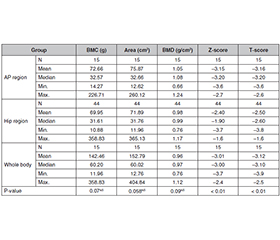
Актуальність. Вимірювання мінеральної щільності кісткової тканини (МЩКТ) за допомогою двохенергетичної рентгенівської абсорбціометрії (DEXA) є міжнародно визнаним стандартним інструментом для оцінки ризику переломів, пов’язаних із крихкістю кісток. Рекомендації товариств вказують, яким групам населення може бути корисний скринінг за допомогою DEXA та використання інструменту оцінки ризику переломів (FRAX) для прийняття рішень щодо фармакологічного лікування остеопорозу. Вітамін D та кальцій є ключовими маркерами здоров’я кісток, оскільки впливають на МЩКТ у різних ділянках скелета. Мета: вивчити зв’язок між концентрацією вітаміну D і кальцію в сироватці крові й показниками мінеральної щільності кісткової тканини за допомогою DEXA з акцентом на стать обстежених. Матеріали та методи. Дослідження проводилося протягом шести місяців у лікарнях м. Мосул, Ірак, за участю 150 осіб (76 чоловіків, 74 жінки)віком від 31 до 91 року. Пацієнти з деякими хронічними захворюваннями не були включені. Мінеральна щільність кісткової тканини вимірювалася за допомогою DEXA на рівні стегна, хребта та всього тіла. Сканування тривало від 5 до 10 хвилин з реєстрацією всіх показників. Відсоток жирової тканини та дані МЩКТ інтерпретували за допомогою T-показника, Z-показника для визначення ступеня тяжкості остеопорозу. Результати. Дослідження не виявило суттєвої різниці між жінками й чоловіками за віком, але вказало на статеві відмінності в ураженні певних кісток. У чоловіків відзначалося більше ураження поперекового відділу хребта, тоді як у жінок — стегнового. Чоловіки мали кращі параметри МЩКТ та показник T-/Z-шкали. У жінок зафіксовано вищий рівень вітаміну D, а в чоловіків — кальцію. Висновки. Дослідження показало вищу мінеральну щільність кісткової тканини в чоловіків, ймовірно, через більшу м’язову масу та вплив андрогенних гормонів, тоді як у жінок ці значення були нижчі, особливо на рівні хребта, що пояснюється дефіцитом естрогенів в постменопаузальному періоді зі збільшенням ризику розвитку остеопорозу.
Background. Bone mineral density (BMD) measurement by dual-energy X-ray absorptiometry (DEXA) is an internationally accepted standard-of-care screening tool used to assess fragility-fracture risk. Society guidelines have recommended which populations may benefit from DEXA screening and the use of the fracture risk assessment tool to guide decisions regarding pharmacologic treatment for osteoporosis. Vitamin D and calcium are key controllers of bone health in that these vitamins affect BMD in various skeletal locations. The purpose of the study was to examine the relationship between the serum concentration of these nutrients and site-specific measurements of BMD using DEXA with an emphasis on sex-specific variation. Materials and methods. The study was performed in six months at the hospitals in Mosul, Iraq and on 150 participants (76 men, 74 women) of the age 31–91 years. Patients who had some chronic conditions were not included. The bone density was measured by DEXA over the hip, spine, and whole body. This took a scan of 5 to 10 minutes and patient data got captured. The outcomes are fat percentage and bone density that were interpreted by means of T-score, Z-score, and BMD to determine the severity of osteoporosis. Results. The research showed no age significant difference between both sexes but indicated sex differences in the affected bone parts. More males were lumbar involved compared to females who were hip involved. Males were more bone-mass, bone-area, BMD, and improved T-/Z-score. Females had higher vitamin D, but males had higher calcium. In males, bone density and vitamin D/calcium levels varied by region. In females, whole-body bone mineral content was highest, and lumbar spine had greatest bone loss. No significant regional differences in vitamin D or calcium were observed in females. Conclusions. The study showed higher bone mass and density in males, likely due to greater muscle mass and androgenic hormone effects, while females had lower values, especially in the spine, explained by postmenopausal estrogen deficiency, increasing osteoporosis risk.
вітамін D; кальцій; мінеральна щільність кісткової тканини; двохенергетична рентгенівська абсорбціометрія
vitamin D; calcium; bone mineral density; dual-energy X-ray absorptiometry
Для ознакомления с полным содержанием статьи необходимо оформить подписку на журнал.
- Al-Hourani K, Tsang SJ, Simpson AHRW. Osteoporosis: current screening methods, novel techniques, and preoperative assessment of bone mineral density. Bone Joint Res. 2021 Dec;10(12):840-843. doi: 10.1302/2046-3758.1012.BJR-2021-0452.R1.
- Wang F, Zheng L, Theopold J, Schleifenbaum S, Heyde CE, Osterhoff G. Methods for bone quality assessment in human bone tissue: a systematic review. J Orthop Surg Res. 2022 Mar 21;17(1):174. doi: 10.1186/s13018-022-03041-4.
- Kadri A, Binkley N, Daffner SD, Anderson PA. Fracture in Patients with Normal Bone Mineral Density: An Evaluation of the Ameri–can Orthopaedic Association’s Own the Bone Registry. J Bone Joint Surg Am. 2023 Jan 18;105(2):128-136. doi: 10.2106/JBJS.22.00012.
- Van Driel M, van Leeuwen JPTM. Vitamin D and Bone: A Story of Endocrine and Auto/Paracrine Action in Osteoblasts. Nutrients. 2023 Jan 17;15(3):480. doi: 10.3390/nu15030480.
- Tsaryk I, Pashkovska N, Pankiv V, Pashkovskyy V, Stankova N. Features of Anxiety and Depression Indicators in Patients with Autoimmune Diabetes Mellitus on the Background of Different Vitamin D Status. Romanian Journal of Diabetes Nutrition and Metabolic Diseases. 2025;32(2):203-209. doi: 10.46389/rjd-2025-1873.
- Malczewska-Lenczowska J, Surała O, Granda D, Szczepańska B, Czaplicki A, Kubacki R. The Relationship between Bone Health Parameters, Vitamin D and Iron Status, and Dietary Calcium Intake in Young Males. Nutrients. 2024 Jan 9;16(2):215. doi: 10.3390/nu16020215.
- De Sire A, Gallelli L, Marotta N, Lippi L, Fusco N, et al. Vitamin D Deficiency in Women with Breast Cancer: A Correlation with Osteoporosis? A Machine Learning Approach with Multiple Factor Ana–lysis. Nutrients. 2022 Apr 11;14(8):1586. doi: 10.3390/nu14081586.
- Wood K, McCarthy S, Pitt H, Randle M, Thomas SL. Wo–men’s experiences and expectations during the menopause transition: a systematic qualitative narrative review. Health Promot Int. 2025 Jan 17;40(1):daaf005. doi: 10.1093/heapro/daaf005.
- Harper JC, Phillips S, Biswakarma R, Yasmin E, Saridogan E, et al. An online survey of perimenopausal women to determine their attitudes and knowledge of the menopause. Womens Health (Lond). 2022 Jan-Dec;18:17455057221106890. doi: 10.1177/17455057221106890.
- Grygorieva N, Tronko M, Kovalenko V, Komisarenko S, Tatarchuk T, et al. Ukrainian Consensus on Diagnosis and Mana–gement of Vitamin D Deficiency in Adults. Nutrients. 2024 Jan 16;16(2):270. doi: 10.3390/nu16020270.
- Moitra P, Madan J. Impact of screen time during COVID-19 on eating habits, physical activity, sleep, and depression symptoms: A cross-sectional study in Indian adolescents. PLoS One. 2022 Mar 8;17(3):e0264951. doi: 10.1371/journal.pone.0264951.
- Pérez-Rodrigo C, Gianzo Citores M, Hervás Bárbara G, Ruiz-Litago F, Casis Sáenz L, et al. Patterns of Change in Dietary Habits and Physical Activity during Lockdown in Spain Due to the COVID-19 Pandemic. Nutrients. 2021 Jan 21;13(2):300. doi: 10.3390/nu13020300.
- Qu Z, Yang F, Yan Y, Hong J, Wang W, et al. Relationship between Serum Nutritional Factors and Bone Mineral Density: A Mendelian Randomization Study. J Clin Endocrinol Metab. 2021 May 13;106(6):e2434-e2443. doi: 10.1210/clinem/dgab085.
- Nakama C, Kadowaki T, Choo J, El-Saed A, Kadota A, et al. Cross-sectional association of bone mineral density with coronary artery calcification in an international multi-ethnic population-based cohort of men aged 40–49: ERA JUMP study. Int J Cardiol Heart Vasc. 2020 Aug 18;30:100618. doi: 10.1016/j.ijcha.2020.100618.
- Karlafti E, Dontas I, Lambrinoudaki I, Vlamis I, Lampropoulou-Adamidou K, et al. Site specific differences in vBMD and geometry in postmenopausal women with primary hyperparathyroi–dism. Endocrine. 2024 Jan;83(1):205-213. doi: 10.1007/s12020-023-03491-8.
- Cherukuri L, Kinninger A, Birudaraju D, Lakshmanan S, Li D, et al. Effect of body mass index on bone mineral density is age-specific. Nutr Metab Cardiovasc Dis. 2021 Jun 7;31(6):1767-1773. doi: 10.1016/j.numecd.2021.02.027.
- Mello JB, Pedretti A, García-Hermoso A, Martins CML, Gaya AR, et al. Exercise in school Physical Education increase bone mineral content and density: Systematic review and meta-analysis. Eur J Sport Sci. 2022 Oct;22(10):1618-1629. doi: 10.1080/17461391.2021.1960426.
- Deng KL, Yang WY, Hou JL, Li H, Feng H, Xiao SM. Association between Body Composition and Bone Mineral Density in Children and Adolescents: A Systematic Review and Meta-Analysis. Int J Environ Res Public Health. 2021 Nov 18;18(22):12126. doi: 10.3390/ijerph182212126.
- Bartolomei S, Grillone G, Di Michele R, Cortesi M. A Comparison between Male and Female Athletes in Relative Strength and Power Performances. J Funct Morphol Kinesiol. 2021 Feb 9;6(1):17. doi: 10.3390/jfmk6010017.
- Ben Mansour G, Kacem A, Ishak M, Grélot L, Ftaiti F. The effect of body composition on strength and power in male and female students. BMC Sports Sci Med Rehabil. 2021 Nov 28;13(1):150. doi: 10.1186/s13102-021-00376-z.
- St Pierre SR, Peirlinck M, Kuhl E. Sex Matters: A Comprehensive Comparison of Female and Male Hearts. Front Physiol. 2022 Mar 22;13:831179. doi: 10.3389/fphys.2022.831179.
- Shlisky J, Mandlik R, Askari S, Abrams S, Belizan JM, et al. Calcium deficiency worldwide: prevalence of inadequate intakes and associated health outcomes. Ann NY Acad Sci. 2022 Jun;1512(1):10-28. doi: 10.1111/nyas.14758.
- Emmanuelle NE, Marie-Cécile V, Florence T, Jean-François A, Françoise L, et al. Critical Role of Estrogens on Bone Homeostasis in Both Male and Female: From Physiology to Medical Implications. Int J Mol Sci. 2021 Feb 4;22(4):1568. doi: 10.3390/ijms22041568.
- Ziegler DV, Vindrieux D, Goehrig D, Jaber S, Collin G, et al. Calcium channel ITPR2 and mitochondria-ER contacts promote cellular senescence and aging. Nat Commun. 2021 Feb 1;12(1):720. doi: 10.1038/s41467-021-20993-z.
- Chmiel JA, Stuivenberg GA, Al KF, Akouris PP, Razvi H, et al. Vitamins as regulators of calcium-containing kidney stones — new perspectives on the role of the gut microbiome. Nat Rev Urol. 2023 Oct;20(10):615-637. doi: 10.1038/s41585-023-00768-5.
- Takata Y, Yang JJ, Yu D, Smith-Warner SA, Blot WJ, et al. Calcium Intake and Lung Cancer Risk: A Pooled Analysis of 12 Prospective Cohort Studies. J Nutr. 2023 Jul;153(7):2051-2060. doi: 10.1016/j.tjnut.2023.03.011.
- George KS, Munoz J, Ormsbee LT, Akhavan NS, Foley EM, et al. The Short-Term Effect of Prunes in Improving Bone in Men. Nutrients. 2022 Jan 10;14(2):276. doi: 10.3390/nu14020276.
- Turcotte AF, O’Connor S, Morin SN, Gibbs JC, Willie BM, et al. Association between obesity and risk of fracture, bone mineral density and bone quality in adults: A systematic review and meta-analysis. PLoS One. 2021 Jun 8;16(6):e0252487. doi: 10.1371/journal.pone.0252487.
- Rinonapoli G, Ruggiero C, Meccariello L, Bisaccia M, Ceccarini P, Caraffa A. Osteoporosis in Men: A Review of an Underestimated Bone Condition. Int J Mol Sci. 2021 Feb 20;22(4):2105. doi: 10.3390/ijms22042105.
- Jain RK, Vokes T. BMDs Derived from Total Body DXA are Strongly Correlated with Dedicated Hip and Spine BMD and are Associated with Prior Fractures in NHANES. J Clin Densitom. 2022 Jul-Sep;25(3):349-356. doi: 10.1016/j.jocd.2021.11.013.
- Kim MW, Lee DH, Huh JW, Bai JW. The impact of obesity on the accuracy of DXA BMD for DXA-equivalent BMD estimation. BMC Musculoskelet Disord. 2022 Dec 26;23(1):1130. doi: 10.1186/s12891-022-06076-0.
- Du Y, Tao S, Oh C, No J. The Function of Body Mass Index in the Older with Osteosarcopenia: A Systematic Review and Meta-–analysis. J Obes Metab Syndr. 2023 Mar 30;32(1):77-86. doi: 10.7570/jomes22057.
- Alghadir AH, Gabr SA, Iqbal A. Concurrent effects of high-intensity interval training and vitamin D supplementation on bone metabolism among women diagnosed with osteoporosis: a randomized controlled trial. BMC Musculoskelet Disord. 2025 Apr 21;26(1):381. doi: 10.1186/s12891-025-08275-x.
- Aschauer R, Unterberger S, Zöhrer PA, Draxler A, Franzke B, et al. Effects of Vitamin D3 Supplementation and Resistance Training on 25-Hydroxyvitamin D Status and Functional Performance of Older Adults: A Randomized Placebo-Controlled Trial. Nutrients. 2021 Dec 26;14(1):86. doi: 10.3390/nu14010086.
- Ashraf H, Maghbouli N, Abolhasani M, Zandi N, Nematizadeh M, et al. Serum vitamin D concentration and anthropometric indicators of adiposity in adults without or with low dose statin users: a cross-sectional study. J Health Popul Nutr. 2024 Dec 2;43(1):206. doi: 10.1186/s41043-024-00668-3.
- Abbood MJ, Abdullah AH. Multinomial risk modeling of osteopenia and osteoporosis in Iraqi women: comparative contributions of osteoprotegerin and vitamin D3. J Genet Eng Biotechnol. 2026 Mar 13;24(2):100681. doi: 10.1016/j.jgeb.2026.100681.
- Rinonapoli G, Pace V, Ruggiero C, Ceccarini P, Bisaccia M, et al. Obesity and Bone: A Complex Relationship. Int J Mol Sci. 2021 Dec 20;22(24):13662. doi: 10.3390/ijms222413662.
- Maïmoun L, Renard E, Humbert L, Aouinti S, Mura T, et al. Modification of bone mineral density, bone geometry and volumetric BMD in young women with obesity. Bone. 2021 Sep;150:116005. doi: 10.1016/j.bone.2021.116005.
- Jepsen KJ, Bigelow EMR, Goulet RW, Nolan BT, Casden MA, et al. Structural differences contributing to sex-specific associations between FN BMD and whole-bone strength for adult White women and men. JBMR Plus. 2024 Jan 30;8(4):ziae013. doi: 10.1093/jbmrpl/ziae013.
- Baxter-Jones ADG, Jackowski SA. Sex differences in bone mineral content and bone geometry accrual: a review of the Paediatric Bone Mineral Accural Study (1991–2017). Ann Hum Biol. 2021 Sep;48(6):503-516. doi: 10.1080/03014460.2021.2014568.
- Hart DA. Sex Differences in Biological Systems and the Conundrum of Menopause: Potential Commonalities in Post-Menopau–sal Disease Mechanisms. Int J Mol Sci. 2022 Apr 8;23(8):4119. doi: 10.3390/ijms23084119.
- Elham AS, Azam K, Azam J, Mostafa L, Nasrin B, Marzieh N. Serum vitamin D, calcium, and zinc levels in patients with COVID-19. Clin Nutr ESPEN. 2021 Jun;43:276-282. doi: 10.1016/j.clnesp.2021.03.040.
- Al-Rawaf SA, Mousa ET, Kamal Abdulhussein F. Correlation between Serum Vitamin D and Calcium Levels in Missed Miscarriage. Arch Razi Inst. 2022 Aug 31;77(4):1349-1353. doi: 10.22092/ARI.2022.357400.2037.
- Da Silveira EA, Moura LANE, Castro MCR, Kac G, Had–ler MCCM, et al. Prevalence of Vitamin D and Calcium Deficiency and Insufficiency in Women of Childbearing Age and Associated Risk Factors: A Systematic Review and Meta-Analysis. Nutrients. 2022 Oct 17;14(20):4351. doi: 10.3390/nu14204351.