
Журнал "Гастроэнтерология" Том 60, №2, 2026
Вернуться к номеру
Вплив стеатозу печінки та підшлункової залози на поведінкові реакції щурів за умов експерименту та після припинення комбінованої дії стеатогенних факторів
Авторы: A.M. Halinska, O.A. Maltseva, O.O. Halinskyi
State Institution “Institute of Gastroenterology of the National Academy of Medical Sciences of Ukraine”, Dnipro, Ukraine
Рубрики: Гастроэнтерология
Разделы: Клинические исследования
Версия для печати
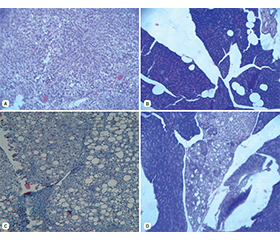
Актуальність. Метаболічно асоційовані стеатотичні ураження печінки розглядають як мультисистемний фенотип кардіометаболічного ризику з потенційними нейроповедінковими наслідками. Зростає увага до стеатозу підшлункової залози як прояву накопичення ектопічного жиру, пов’язаного з інсулінорезистентністю й можливим порушенням ендокринної та екзокринної функцій. Комбіновані моделі високожирового, високовуглеводного навантаження та хронічного стресу дають змогу відтворити комплексну метаболічну дизрегуляцію та вивчити системні ефекти і їх часткову оберненість. Мета: оцінити вплив аліментарно-стресового стеатозу на поведінкову активність щурів та визначити особливості природного відновлення після припинення патогенного впливу. Матеріали та методи. Дослідження виконано на статевозрілих самцях білих лабораторних щурів (n = 31). Тварин розподілено на три групи: контрольну (n = 8), групу з 60-добовим аліментарно-стресовим моделюванням (n = 16) і групу самореабілітації, у якій після 60 діб моделювання наступали 30 діб відновлення без лікування (n = 7). Стеатоз індукували стеатогенною дієтою з підвищеним вмістом насичених жирів (30 % енергетичної цінності раціону), 10% водним розчином фруктози як єдиним джерелом питва та впливом хронічного стресу, викликаного обмеженням життєвого простору. Поведінкові реакції вивчали в тестах «Відкрите поле» та «Піднятий хрестоподібний лабіринт». Формування стеатозу печінки й підшлункової залози підтверджували гістологічно. Нормальність розподілу оцінювали за Шапіро — Вілком та застосовували t-тест Вельча або Манна — Вітні; дані вважали статистично вірогідними при p < 0,05. Результати. Після 60 діб аліментарно-стресового моделювання стеатозу у щурів зафіксовано різке пригнічення локомоторної та орієнтовно-дослідницької активності: кількість перетинів зовнішніх квадратів зменшилася з 32,25 ± 3,13 до 5,00 (3,00–10,50), стійок — з 12,81 ± 1,46 до 2,00 (1,00–4,00), актів дослідження нір — з 21,19 ± 1,96 до 4,94 ± 0,73 (усі p < 0,001). Після 30 діб самореабілітації загальна й вертикальна активність наближалися до показників контролю: 24,71 ± 4,18 перетину зовнішніх квадратів, 12,57 ± 2,57 стійки (p > 0,05), однак поведінка дослідження нірок залишалася вірогідно нижчою — 13,43 ± 2,32 проти 21,19 ± 1,96 (p = 0,02). У тесті «Піднятий хрестоподібний лабіринт» зміни мали вибірковий характер та стосувалися переважно обережної поведінки, пов’язаної з тривогою, і вертикальних реакцій: кількість визирань зменшувалася з 13,19 ± 1,36 до 6,56 ± 1,38 (p < 0,001), а стійок — з 7,31 ± 1,03 до 2,00 (0,75–2,25) (p < 0,001). Натомість показники входів у рукави та переходів через центр статистично значущо не відрізнялися від контролю (p > 0,05), що узгоджується з різною чутливістю поведінкових маркерів у цій моделі. Висновки. Аліментарно-стресове моделювання спричиняє морфологічно підтверджені стеатотичні зміни печінки й жирову інфільтрацію підшлункової залози і супроводжується вираженим пригніченням моторної та орієнтовно-дослідницької активності з вибірковими зрушеннями обережної поведінки, пов’язаної з тривогою, а припинення стеатогенного впливу забезпечує часткове відновлення з персистенцією окремих дослідницьких порушень.
Background. Metabolically associated steatotic liver diseases are considered a multisystem phenotype of cardiometabolic risk with potential neurobehavioral consequences. Increasing attention is being paid to pancreatic steatosis as a manifestation of ectopic fat accumulation associated with insulin resistance and possible impairment of endocrine and exocrine functions. Combined models of high-fat, high-carbohydrate loading and chronic stress enable the reproduction of complex metabolic dysregulation and the assessment of systemic effects and their partial reversibility. The purpose: to evaluate the effect of alimentary-stress-induced steatosis on the behavioral activity of rats and to determine the features of natural recovery after cessation of the pathogenic influence. Materials and methods. The study was conducted on sexually mature male white laboratory rats (n = 31). The animals were divided into three groups: a control group (n = 8), a group with 60-day alimentary-stress modeling (n = 16), and a self-rehabilitation group, in which after 60 days of modeling, there was a 30-day recovery period without treatment (n = 7). Steatosis was induced by a steatogenic diet with an increased content of saturated fats (30 % of the energy value of the diet), a 10% aqueous fructose solution as the sole source of drinking fluid, and exposure to chronic stress caused by restriction of living space. Behavioral reactions were assessed using the Open Field and Elevated Plus Maze tests. The formation of liver and pancreatic steatosis was confirmed histologically. Normality of distribution was assessed using the Shapiro-Wilk test, and Welch’s t-test or the Mann-Whitney test was applied; at p < 0.05, the data were considered statistically significant. Results. After 60 days of alimentary-stress modeling of steatosis, rats exhibited a marked suppression of locomotor and exploratory activity: crossings of outer squares decreased from 32.25 ± 3.13 to 5.00 (3.00–10.50), the number of rearings from 12.81 ± 1.46 to 2.00 (1.00–4.00), and hole exploration acts from 21.19 ± 1.96 to 4.94 ± 0.73 (all p < 0.001). After 30 days of self-rehabilitation, total and vertical activity approached control values ((24.71 ± 4.18) crossings of outer squares; (12.57 ± 2.57) rearings; p > 0.05); however, hole exploration behavior remained significantly lower — 13.43 ± 2.32 versus 21.19 ± 1.96 (p = 0.02). In the Elevated Plus Maze test, changes were selective and mainly concerned anxiety-related cautious behavior and vertical responses: the number of head dips decreased from 13.19 ± 1.36 to 6.56 ± 1.38 (p < 0.001), and rearings from 7.31 ± 1.03 to 2.00 (0.75–2.25) (p < 0.001). In contrast, the number of arm entries and center crossings did not differ statistically from control values (p > 0.05), which is consistent with the differing sensitivity of behavioral markers in this model. Conclusions. Alimentary-stress modeling induces morphologically confirmed steatotic changes in the liver and fatty infiltration of the pancreas and is accompanied by pronounced suppression of motor and exploratory activity with selective alterations in anxiety-related cautious behavior, while cessation of the steatogenic influence ensures partial recovery with persistence of certain exploratory impairments.
щури; аліментарно-стресовий стеатоз; поведінкова активність; тривожність; орієнтовно-дослідницька поведінка; самореабілітація
rats; alimentary-stress steatosis; behavioral activity; anxiety; exploratory behavior; self-rehabilitation
Для ознакомления с полным содержанием статьи необходимо оформить подписку на журнал.
- Rinella ME, Lazarus JV, Ratziu V, et al.; NAFLD Nomenclature consensus group. A multisociety Delphi consensus statement on new fatty liver disease nomenclature. Hepatology. 2023 Dec 1;78(6):1966-1986. doi: 10.1097/HEP.0000000000000520.
- European Association for the Study of the Liver; European Association for the Study of Diabetes; European Association for the Study of Obesity. EASL-EASD-EASO Clinical Practice Guidelines on the management of metabolic dysfunction-associated steatotic liver disease (MASLD): Executive Summary. Diabetologia. 2024 Nov;67(11):2375-2392. doi: 10.1007/s00125-024-06196-3.
- Ho GJK, Tan FXN, Sasikumar NA, et al. High Global Preva–lence of Steatotic Liver Disease and Associated Subtypes: A Meta-analy–sis. Clin Gastroenterol Hepatol. 2025 Dec;23(13):2423-2432.e1. doi: 10.1016/j.cgh.2025.02.006.
- Younossi ZM, Kalligeros M, Henry L. Epidemiology of metabolic dysfunction-associated steatotic liver disease. Clin Mol Hepatol. 2025;31(Suppl):S32-S50. doi: 10.3350/cmh.2024.0431.
- Israelsen M, Francque S, Tsochatzis EA, Krag A. Steatotic liver disease. Lancet. 2024 Nov 2;404(10464):1761-1778. doi: 10.1016/S0140-6736(24)01811-7.
- Pagkali A, Makris A, Brofidi K, Agouridis AP, Filippatos TD. Pathophysiological Mechanisms and Clinical Associations of Non-Alcoholic Fatty Pancreas Disease. Diabetes Metab Syndr Obes. 2024 Jan 22;17:283-294. doi: 10.2147/DMSO.S397643.
- Habas E, Farfar K, Habas E, Rayani A, Elzouki AN. Extended Review and Updates of Nonalcoholic Fatty Pancreas Disease. Saudi J Med Med Sci. 2024 Oct-Dec;12(4):284-291. doi: 10.4103/sjmms.sjmms_526_23.
- Alempijevic T, Dragasevic S, Zec S, Popovic D, Milosavljevic T. Non-alcoholic fatty pancreas disease. Postgrad Med J. 2017 Apr;93(1098):226-230. doi: 10.1136/postgradmedj-2016-134546.
- Lim S, Meigs JB. Links between ectopic fat and vascular disease in humans. Arterioscler Thromb Vasc Biol. 2014 Sep;34(9):1820-1826. doi: 10.1161/ATVBAHA.114.303035.
- Watt MJ, Miotto PM, De Nardo W, Montgomery MK. The Liver as an Endocrine Organ-Linking NAFLD and Insulin Resistance. Endocr Rev. 2019 Oct 1;40(5):1367-1393. doi: 10.1210/er.2019-00034.
- Mózes FE, Lee JA, Vali Y, et al.; LITMUS investigators. Performance of non-invasive tests and histology for the prediction of clinical outcomes in patients with non-alcoholic fatty liver di–sease: an indivi–dual participant data meta-analysis. Lancet Gastroenterol Hepatol. 2023 Aug;8(8):704-713. doi: 10.1016/S2468-1253(23)00141-3.
- Zacharia GS, Veena F, Habib H, Dad A, Asare M. The Fat-Pancreas Axis: A Narrative Review Unraveling the Role of Obesity in Pancreatic Diseases. Cureus. 2025 Dec 13;17(12):e99148. doi: 10.7759/cureus.99148.
- Du H, Zhou Y, Wang J, Bai X, Tao B, Chen M. High-fat fructose diet induces neuroinflammation and anxiety-like behaviors by modulating liver-brain axis communication. Psychopharmacology (Berl). 2025 Dec;242(12):2651-2664. doi: 10.1007/s00213-025-06820-z.
- Bove M, Lama A, Schiavone S, Pirozzi C, Tucci P, Sikora V, et al. Social isolation triggers oxidative status and impairs systemic and hepatic insulin sensitivity in normoglycemic rats. Biomed Pharmaco–ther. 2022 May;149:112820. doi: 10.1016/j.biopha.2022.112820.
- Zou L, Tian Y, Wang Y, Chen D, Lu X, Zeng Z, et al. High-cholesterol diet promotes depression- and anxiety-like behaviors in mice by impact gut microbe and neuroinflammation. J Affect Disord. 2023 Apr 14;327:425-438. doi: 10.1016/j.jad.2023.01.122.
- Rosso M, Wirz R, Loretan AV, et al. Reliability of common mouse behavioural tests of anxiety: A systematic review and meta-–analysis on the effects of anxiolytics. Neurosci Biobehav Rev. 2022 Dec;143:104928. doi: 10.1016/j.neubiorev.2022.104928.
- Clark TD, Crean AJ, Senior AM. Obesogenic diets induce anxiety in rodents: A systematic review and meta-analysis. Obes Rev. 2022 Mar;23(3):e13399. doi: 10.1111/obr.13399.
- Skyrda IYu, Halinska AM, Halinskyi O. Metabolic dysfunction-associated steatotic liver disease and pancreatic steatosis: Pathogenetic mechanisms, experimental modeling, and prospects for correction under chronic stress. Perspektyvy ta Innovatsii Nauky. 2026 Jan 10;12(58):2824-2834. doi: 10.52058/2786-4952-2025-12(58)-2824-2834 (in Ukrainian).
- Walsh RN, Cummins RA. The Open-Field Test: a critical review. Psychol Bull. 1976 May;83(3):482-504.
- Pellow S, Chopin P, File SE, Briley M. Validation of open: closed arm entries in an elevated plus-maze as a measure of anxie–ty in the rat. J Neurosci Methods. 1985 Aug;14(3):149-167. doi: 10.1016/0165-0270(85)90031-7.
- Evans AK, Saw NL, Woods CE, et al. Impact of high-fat diet on cognitive behavior and central and systemic inflammation with aging and sex differences in mice. Brain Behav Immun. 2024 May;118:334-354. doi: 10.1016/j.bbi.2024.02.025.
- Huang X, Sang Z, Liu H, et al. From nonalcoholic fatty liver disease to neuroinflammation: the role of chronic systemic inflammation. Metab Brain Dis. 2025;40:240. doi: 10.1007/s11011-025-01669-9.
- Casagrande BP, Ribeiro AM, Pisani LP, Estadella D. Hippocampal BDNF mediated anxiety-like behaviours induced by obesogenic diet withdrawal. Behav Brain Res. 2023 Jan 5;436:114077. doi: 10.1016/j.bbr.2022.114077.
- Kjærgaard K, Daugaard Mikkelsen AC, Landau AM, et al. Cognitive dysfunction in early experimental metabolic dysfunction-associated steatotic liver disease is associated with systemic inflammation and neuroinflammation. JHEP Rep. 2024;6(3):100992. doi: 10.1016/j.jhepr.2023.100992.
- Shea S, Lionis C, Kite C, et al. Non-alcoholic fatty liver di–sease and coexisting depression, anxiety and/or stress in adults: a systematic review and meta-analysis. Front Endocrinol (Lausanne). 2024 Apr 16;15:1357664. doi: 10.3389/fendo.2024.1357664.
- Hwang J, Lee S, Okada J, et al. Liver-innervating vagal sensory neurons are indispensable for the development of hepatic steatosis and anxiety-like behavior in diet-induced obese mice. Nat Commun. 2025 Jan 24;16(1):991. doi: 10.1038/s41467-025-56328-5.
- Pasta A, Formisano E, Calabrese F, et al. From Dysbiosis to Hepatic Inflammation: A Narrative Review on the Diet-Micro–biota-Liver Axis in Steatotic Liver Disease. Microorganisms. 2025 Jan 23;13(2):241. doi: 10.3390/microorganisms13020241.
- Cardoso Delgado T, Martín-Cuevas C, Sánchez Hidalgo AC, et al. Metabolic dysfunction-associated steatotic liver disease alters brain function and behavior: Insights from liver-targeted siRNA the–rapy. Sci Adv. 2025 Oct 24;11(43):eady9758. doi: 10.1126/sciadv.ady9758.
- Seidel F, Vreeken D, Custers E, et al. Metabolic dysfunction-associated steatotic liver disease is associated with effects on cerebral perfusion and white matter integrity. Heliyon. 2024 Sep 26;10(19):e38516. doi: 10.1016/j.heliyon.2024.e38516.
- Mikkelsen ACD, Kjærgaard K, Schapira AHV, et al. The liver-brain axis in metabolic dysfunction-associated steatotic liver di–sease. Lancet Gastroenterol Hepatol. 2025 Mar;10(3):248-258. doi: 10.1016/S2468-1253(24)00320-0.