
Международный неврологический журнал Том 22, №3, 2026
Вернуться к номеру
Струс головного мозку як центральний неврологічний компонент поєднаної краніофаціальної травми
Авторы: Петрова У.М.
Ужгородський національний університет, м. Ужгород, Україна
Рубрики: Неврология
Разделы: Справочник специалиста
Версия для печати
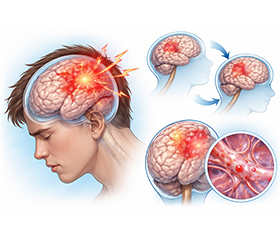
Поєднана краніофаціальна травма часто супроводжується легкою черепно-мозковою травмою, однак струс головного мозку може залишатися недіагностованим через домінування анатомічно очевидних ушкоджень лицевого скелета та неспецифічність неврологічних проявів. Метою огляду було узагальнити сучасні дані щодо місця струсу головного мозку у структурі поєднаної краніофаціальної травми, особливостей його клінічної діагностики, функціональних наслідків і принципів мультидисциплінарного ведення пацієнтів. Проведено наративний огляд клінічних настанов, систематичних оглядів, метааналізів і клінічних досліджень, пошук яких здійснювали в базах PubMed/Medline та Cochrane Library із використанням термінів, що стосувалися струсу головного мозку, легкої черепно-мозкової, щелепно-лицевої та краніофаціальної травми, постконтузійних симптомів і нейросенсорних порушень. Встановлено, що ризик поєднаного ушкодження мозку підвищується при високоенергетичних механізмах травми, а переломи середньої та верхньої зон обличчя можуть свідчити про передачу значної травматичної енергії на структури черепа й мозку. Клінічний фенотип включає загальномозкові, когнітивні, вестибулярні, нейроокулярні, цервікогенні та психоемоційні прояви, які можуть поєднуватися з ушкодженням трійчастого й лицевого нервів, нейросенсорним дефіцитом, болем і функціональними обмеженнями, пов’язаними з переломами та міжщелепною фіксацією. Недодіагностика струсу головного мозку може призводити до несвоєчасного надання рекомендацій щодо режиму, фізичного й когнітивного навантаження, подальшого спостереження та реабілітації, сприяючи персистуванню головного болю, запаморочення, когнітивних труднощів, розладів сну, тривожних і депресивних проявів. Струс головного мозку слід розглядати як провідний неврологічний компонент поєднаної краніофаціальної травми, що потребує активного скринінгу, повторної клінічної оцінки та скоординованої мультидисциплінарної допомоги.
Combined craniofacial trauma is frequently accompanied by mild traumatic brain injury; however, concussion may remain unrecognized because clinically apparent facial skeletal injuries dominate the initial assessment and neurological manifestations are often nonspecific. The aim of this review was to summarize current evidence on the role of concussion in combined craniofacial trauma, its diagnostic features, functional consequences, and principles of multidisciplinary patient management. A narrative review of clinical guidelines, systematic reviews, meta-analyses, and clinical studies was conducted. The literature search was performed in PubMed/MEDLINE and the Cochrane Library using terms related to concussion, mild traumatic brain injury, maxillofacial and craniofacial trauma, post-concussive symptoms, and neurosensory disorders. The available evidence indicates that the risk of concomitant brain injury increases in high-energy trauma, whereas fractures of the middle and upper facial thirds may reflect substantial transmission of traumatic energy to the skull and brain. The clinical phenotype includes cerebral, cognitive, vestibular, neuro-ophthalmological, cervicogenic, and psycho-emotional manifestations, which may coexist with trigeminal or facial nerve injury, neurosensory deficits, pain, and functional limitations associated with fractures and maxillomandibular fixation. Failure to recognize concussion may delay recommendations concerning regimen, physical and cognitive activity, follow-up, and rehabilitation and may contribute to persistent headache, dizziness, cognitive difficulties, sleep disturbance, anxiety, and depressive symptoms. Concussion should therefore be regarded as a principal neurological component of combined craniofacial trauma requiring active screening, repeated clinical assessment, and coordinated multidisciplinary care.
струс головного мозку; легка черепно-мозкова травма; краніофаціальна травма; щелепно-лицеві переломи; постконтузійні симптоми; огляд
concussion; mild traumatic brain injury; craniofacial trauma; maxillofacial fractures; post-concussive symptoms; review
Для ознакомления с полным содержанием статьи необходимо оформить подписку на журнал.
1. Goh EZ, Beech N, Johnson NR. Traumatic maxillofacial and brain injuries: a systematic review. Int J Oral Maxillofac Surg. 2021;50(8):1027-1033. doi: 10.1016/j.ijom.2020.12.003.
2. Othman A, Al-Mofreh Al-Qahtani F, Al-Qahtani H, et al. Traumatic brain injuries and maxillofacial fractures: a systematic review and meta-analysis. Oral Maxillofac Surg. 2023;27(3):373-385. doi: 10.1007/s10006-022-01076-9.
3. You Y, Romero J, Diaz G, Evans R. Concurrent traumatic brain injury with craniofacial trauma: a 10-year analysis of a single institution’s trauma registry. Trauma Care. 2023;3(3):108-113. doi: 10.3390/traumacare3030011.
4. Lupascu IT, Hostiuc S, Minoiu CA, Hostiuc M, Popa BV. Comparison of traumatic brain injury in adult patients with and without facial fractures. Tomography. 2024;10(10):1534-1546. doi: 10.3390/tomography10100113.
5. Kokko L, Puolakkainen T, Thorn H, et al. Traumatic brain injury in patients with facial fracture — a challenge for the clinician? J Stomatol Oral Maxillofac Surg. 2025;126:102302. doi: 10.1016/j.jormas.2025.102302.
6. Silverberg ND, Iverson GL, Cogan AM, et al. The American Congress of Rehabilitation Medicine diagnostic criteria for mild traumatic brain injury. Arch Phys Med Rehabil. 2023;104(8):1343-1355. doi: 10.1016/j.apmr.2023.03.036.
7. National Institute for Health and Care Excellence. Head injury: assessment and early management (NG232). 2023.
8. Valente JH, et al. Clinical policy: critical issues in the management of adult patients presenting to the emergency department with mild traumatic brain injury. Ann Emerg Med. 2023;81(5):e63-e105.
9. Patricios JS, Schneider KJ, Dvorak J, et al. Consensus statement on concussion in sport: the 6th International Conference on Concussion in Sport — Amsterdam, October 2022. Br J Sports Med. 2023;57(11):695-711. doi: 10.1136/bjsports-2023-106898.
10. Gil-Jardin C, et al. French guidelines for the management of patients with mild traumatic brain injury. Anaesth Crit Care Pain Med. 2023;42(4):101261. doi: 10.1016/j.accpm.2023.101261.
11. British Columbia Guidelines and Protocols Advisory Committee. Concussion/Mild Traumatic Brain Injury (mTBI). 2024.
12. Backus BE, Moustafa F, Skogen K, et al. Consensus paper on the assessment of adult patients with traumatic brain injury with Glasgow Coma Scale 13–15 at the emergency department: a multidisciplinary overview. Eur J Emerg Med. 2024;31(4):240-249.
13. Centers for Disease Control and Prevention. Mild TBI Management Guideline for Adults. 2025.
14. Galteland P, Dving M, Nss I, et al. The association between head injury and facial fracture treatment: an observational study of hospitalized bicyclists from a level 1 trauma centre. Acta Neurochir (Wien). 2024;166:132. doi: 10.1007/s00701-024-06019-9.
15. Mao J, Xue J, Li Y, Zhou Q, Zhou S, Zhou Z. Factors influencing traumatic brain injuries in maxillofacial fractures: a 12-year retrospective analysis of 2841 patients. Dent Traumatol. 2024;40(4):435-443. doi: 10.1111/edt.12942.
16. Prerana P, Sangavi A, Venkatesh U, Kumar R, Chickle B. Maxillofacial injury patterns in road traffic accidents: clinical evaluation. Indian J Otolaryngol Head Neck Surg. 2024;76(6):5486-5494.
17. Bhaskar B, et al. A comparison of maxillofacial and head injuries following electric scooter and bicycle accidents. J Oral Maxillofac Surg. 2024;82(8):953-960.e4.
18. Lee SJ, et al. A retrospective comparative study of maxillofacial injury associated with stand-up electric scooters and bicycles. Dent Traumatol. 2024.
19. Rashid J, Wu S, Abdelrahman A, McMillan K. Maxillofacial trauma caused by e-scooters: a retrospective review prior to the extension of the UK scheme. Br J Oral Maxillofac Surg. 2024;62(2):157-163.
20. Stanisce L, Fisher AH, Choi BY. How did the COVID-19 pandemic affect trends in facial trauma? Craniomaxillofac Trauma Reconstr. 2022;15(2):132-138. doi: 10.1177/19433875211022574.
21. Lorenz FJ, et al. Impact of the COVID-19 pandemic on the incidence, etiology, demographics, and treatment of craniomaxillofacial trauma. Otolaryngol Head Neck Surg. 2025;172(2):444-456. doi: 10.1002/ohn.981.
22. Prysiazhniuk O, Palyvoda R, Chepurnyi Y, et al. War-related maxillofacial injuries in Ukraine: a retrospective multicenter study. Arch Craniofac Surg. 2025;26(2):51-58. doi: 10.7181/acfs.2024.0074.
23. Alves VP, Souto-Souza D, Fernandes IA, Falci SGM, et al. Impact of the COVID-19 pandemic on the prevalence of fractures and etiology of orofacial trauma: a systematic review and meta-analysis. BMC Oral Health. 2025 Apr 26;25(1):643. doi: 10.1186/s12903-025-06009-y.
24. Khan F, Rikhotso RE. The incidence and aetiology of maxillofacial trauma and concomitant traumatic brain injury in a Johannesburg tertiary hospital. J Craniofac Surg. 2025 Jul-Aug;36(5):1842-1846. doi: 10.1097/SCS.0000000000011056. PMID: 39750746.
25. Dasukil S, Verma S, Jena AK, Mohapatra M. Frequency of concomitant injuries in maxillofacial trauma in a tertiary health care centre in India: a 5-year retrospective study. Chin J Traumatol. 2025;28(3):216-219. doi: 10.1016/j.cjtee.2024.03.008.
26. Barlow KM. Mild traumatic brain injury and concussion and persisting post-concussion symptoms: new guidelines to support evidence-based assessment and management. Med J Aust. 2025 Nov 3;223(9):446-449. doi: 10.5694/mja2.70082.
27. Le Sage N, Chauny JM, Berthelot S, et al. Post-concussion symptoms rule: derivation and validation of a clinical decision rule for early prediction of persistent symptoms after a mild traumatic brain injury. J Neurotrauma. 2022 Oct;39(19-20):1349-1362. doi: 10.1089/neu.2022.0026.
28. Cancelliere C, Verville L, Stubbs JL, et al. Post-concussion symptoms and disability in adults with mild traumatic brain injury: a systematic review and meta-analysis. J Neurotrauma. 2023;40(11-12):1045-1059. doi: 10.1089/neu.2022.0185.
29. Dry J, Ouellet B, de Guise , et al. Prognostic factors for persistent symptoms in adults with mild traumatic brain injury: an overview of systematic reviews. Syst Rev. 2023;12:127. doi: 10.1186/s13643-023-02284-4.
30. Lubbers VF, et al. Emergency department risk factors for post-concussion syndrome after mild traumatic brain injury: a systematic review. J Neurotrauma. 2024;41(11-12):1253-1270. doi: 10.1089/neu.2023.0302.
31. Peacock WF, Kuehl D, Diaz-Arrastia R, et al. Factors associated with persistent symptoms following mild traumatic brain injury. JAMA Netw Open. 2025;8(10):e2537729. doi: 10.1001/jamanetworkopen.2025.37729.
32. McIntosh SJ, Vergeer M, Galarneau JM, Eliason PH, Debert CT. Factors associated with persisting symptoms after concussion in adults with mild traumatic brain injury: a systematic review and meta-analysis. JAMA Netw Open. 2025 Jun 2;8(6):e2516619. doi: 10.1001/jamanetworkopen.2025.16619.
33. Lucke-Wold B, Pierre K, Aghili-Mehrizi S, Murad GJA. Facial fractures: independent prediction of neurosurgical intervention. Asian J Neurosurg. 2022;17(1):17-22. doi: 10.1055/s-0042-1749068.
34. Pope P, Hassan B, Oslin K, et al. Traumatic brain injury in patients with frontal sinus fractures. J Craniofac Surg. 2025 Jul-Aug;36(5):1822-1827. doi: 10.1097/SCS.0000000000010301.
35. Malla A, et al. Traumatic brain injury and its association with orbital fracture characteristics and repair. J Craniofac Surg. 2025 Jul-Aug;36(5):1834-1838. doi: 10.1097/SCS.0000000000010456.
36. Dubron K, Verbist M, Shaheen E, Dormaar TJ, Jacobs R, Politis C. Incidence, Aetiology, and Associated Fracture Patterns of Infraorbital Nerve Injuries Following Zygomaticomaxillary Complex Fractures: A Retrospective Analysis of 272 Patients. Craniomaxillofac Trauma Reconstr. 2022;15(2):139-146. doi: 10.1177/19433875211022569.
37. Chandan SN, Shetty SK, Shetty SK, Shah AK. Inferior alveolar nerve dysfunction in mandibular fractures: a prospective cohort study. J Korean Assoc Oral Maxillofac Surg. 2021;47(3):183-189. doi: 10.5125/jkaoms.2021.47.3.183.
38. Maunula MKK, Blomgren K, Sinkkonen ST, Nyman K, Tapiovaara LK. Isolated Orbital Fracture — Treatment and Outcomes in a Single Tertiary Care Centre. Craniomaxillofac Trauma Reconstr. 2024;17(4):NP163-NP171. doi: 10.1177/19433875241247370.
39. Trejo E, Garca P, Ortega DA, Gonzlez KC, Botello E, Hernndez G, Morales JA, Martnez R. Frontal Sinus Fractures and Traumatic Brain Injury: Predictors of Mortality in Surgical Management. Craniomaxillofac Trauma Reconstr. 2024;17(4):314-323. doi: 10.1177/19433875241229882.
40. Popat SP, Rattan V, Rai S, Jolly SS, Malhotra S. Nutritional intervention during maxillomandibular fixation of jaw fractures prevents weight loss and improves quality of life. Br J Oral Maxillofac Surg. 2021;59(4):478-484. doi: 10.1016/j.bjoms.2020.10.009.
41. S BB, Jardim LC, Schuch LF, et al. Analysis of factors that influence quality of life of individuals undergoing treatment for mandibular fractures: A systematic review and meta-analysis. Oral Surgery. 2022 Sep;134(3):289-301. doi: 10.1016/j.oooo.2022.01.012. PMID: 35440426.
42. Mehta UB, Londhe U, Bhate K, Bafna M, Pande S, Shetty L. Evaluating infra-orbital nerve injury in zygomaticomaxillary complex fractures: a systematic review and meta-analysis. Front Oral Health. 2025;6:1726808. doi: 10.3389/froh.2025.1726808.
43. Alladi S, et al. Incidence neurosensory deficit in mandibular fractures. Bioinformation. 2023;19(6):725-728. doi: 10.6026/97320630019725.
44. Mundepi N, Dora H, Sharma M, Patil K, Rangnani I, Saha S. Comparison of Neurosensory Recovery of the Inferior Alveolar Nerve After Open and Closed Reduction for Mandibular Fractures: A Prospective Study. Cureus. 2024;16:e53175. doi: 10.7759/cureus.53175.
45. Van der Cruyssen F, Palla B, Jacobs R, Politis C, Zuniga J, Renton T. Consensus guidelines on training, diagnosis, treatment and follow-up care of trigeminal nerve injuries. Int J Oral Maxillofac Surg. 2024;53(1):68-77. doi: 10.1016/j.ijom.2023.06.003.
46. Eliav T, Benoliel R, Korczeniewska OA. Post-Traumatic Trigeminal Neuropathy: Neurobiology and Pathophysiology. Biology (Basel). 2024;13(3):167. doi: 10.3390/biology13030167.
47. Schiavone M, Ziccardi VB. Trigeminal nerve injuries in oral and maxillofacial surgery: a literature review. Front Oral Maxillofac Med. 2021;3:28. doi: 10.21037/fomm-21-26.
48. Park H-J, Ahn J-M, Ryu J-W. Post-Traumatic Trigeminal Neuropathic Pain: A Narrative Review of Understanding, Management, and Prognosis. Biomedicines. 2024;12(9):2058. doi: 10.3390/biomedicines12092058.
49. Lakshmi R, Shanmugam S, Madhumathi A, et al. Neurosensory Assessment of Infraorbital Nerve Injury Following Unilateral Zygomaticomaxillary Complex Fracture — A Prospective Study. Open Dent J. 2022;16:e187421062206140.
50. de Santana IHG, Viana MRM, Palhano-Dias JC, et al. Orbital floor fracture (blow out) and its repercussions on eye movement: a systematic review. Eur J Med Res. 2024;29(1):427. doi: 10.1186/s40001-024-02023-y.
51. Hassan B, Yoon J, Er S, et al. Predictors of Postoperative Diplopia Following Orbital Fracture Repair in Adults. Plast Reconstr Surg. 2024;154(5):1048-1056. doi: 10.1097/PRS.0000000000011136.
52. Chen H, Bao Y, Zhang J, et al. Predictors of diplopia following orbital fractures based on anatomical location, a retrospective cohort study. Head Face Med. 2025;21:61. doi: 10.1186/s13005-025-00507-8.
53. Azharudeen M, Ravindran V, Shahina KT, et al. Effects of nutritional intervention on total protein and albumin levels in patients with maxillofacial trauma receiving intermaxillary fixation: a rando–mized controlled trial. Oral Maxillofac Surg. 2025 Jul 9;29(1):133. doi: 10.1007/s10006-025-01429-0. PMID: 40632276.
54. Agier P, Kozakiewicz M, Tyszkiewicz S, Gabryelczak I. Risk of Permanent Dysfunction of Facial Nerves After Open Rigid Internal Fixation in the Treatment of Mandibular Condylar Process Fracture. Med Sci (Basel). 2025;13(3):121. doi: 10.3390/medsci13030121.
55. Mistry RK, Pendleton C, Kutz JW Jr. Facial Nerve Trauma. StatPearls. Treasure Island (FL): StatPearls Publishing; updated 2023.
56. Adhan IK, Gunton KB. Optimal Diagnostic Strategies for Concussion-Related Vision Disorders: A Review. Eye Brain. 2025;17:27-36. doi: 10.2147/EB.S492854.
57. Mller M-L, Mki K, Nybo T, Huovinen A, Marinkovic I, Melkas S, Johansson J. Evaluation of Visual Disturbances After Mild Traumatic Brain Injury — A One-Year Follow-up Study. J Head Trauma Rehabil. 2025;40(3):E208-E215. doi: 10.1097/HTR.0000000000001010.
58. Nisted I, Hellemose LA, Eggertsen PP, Odgaard L, Bek T, Nielsen JF. Convergence insufficiency in patients with post-concussion syndrome is accompanied by a higher symptom load: a cross-sectional study. Brain Inj. 2024;38(8):645-651. doi: 10.1080/02699052.2024.2334355.
59. Cheever K, McDevitt J, Phillips J, Kawata K. The Role of Cervical Symptoms in Post-concussion Management: A Systematic Review. Sports Med. 2021;51(9):1875-1891. doi: 10.1007/s40279-021-01469-y.
60. Belhassen S, Mat Q, Ferret C, Clavel R, Renaud B, Cabaraux P. Post-Traumatic Craniocervical Disorders From a Postural Control Perspective: A Narrative Review. Brain Neurorehabil. 2023;16(2):e15. doi: 10.12786/bn.2023.16.e15.
61. Sergeyenko Y, Andreae ME, Segal M. Diagnosis and management of mild traumatic brain injury: a comprehensive, patient-centered approach. Curr Pain Headache Rep. 2025;29:19. doi: 10.1007/s11916-024-01333-4.
62. Mavroudis I, Ciobica A, Bejenariu AC, Dobrin RP, Apostu M, Dobrin I, Blmu I-M. Cognitive Impairment following Mild Traumatic Brain Injury (mTBI): A Review. Medicina (Kaunas). 2024;60(3):380. doi: 10.3390/medicina60030380.
63. Schneider ALC, Huie JR, Boscardin WJ, Nelson L, Barber JK, Yaffe K, et al.; TRACK-TBI Investigators. Cognitive Outcome 1 Year After Mild Traumatic Brain Injury: Results From the TRACK-TBI Study. Neurology. 2022;98(12):e1248-e1261. doi: 10.1212/WNL.0000000000200041.
64. Tsai YC, Liu CJ, Huang HC, Lin JH, Chen PY, Su YK, et al. A Meta-analysis of Dynamic Prevalence of Cognitive Deficits in the Acute, Subacute, and Chronic Phases After Traumatic Brain Injury. J Neurosci Nurs. 2021;53(2):63-68. doi: 10.1097/JNN.0000000000000570.
65. Halalmeh DR, Salama HZ, LeUnes E, Feitosa D, Ansari Y, Sachwani-Daswani GR, Moisi MD. The Role of Neuropsychology in Traumatic Brain Injury: Comprehensive Literature Review. World Neurosurg. 2024;183:128-143. doi: 10.1016/j.wneu.2023.12.069.
66. Chan A, Ouyang J, Nguyen K, Jones A, Basso S, Karasik R. Traumatic brain injuries: a neuropsychological review. Front Behav Neurosci. 2024;18:1326115. doi: 10.3389/fnbeh.2024.1326115.
67. Shi S, Mikoli A, LeMoult J, Rights J, Panenka WJ, Silverberg ND. Prediction of Mental Health Complications Following Mild Traumatic Brain Injury. J Neurotrauma. 2025;42(15–16):1359-1370. doi: 10.1089/neu.2024.0505.
68. Dehbozorgi M, Maghsoudi MR, Mohammadi I, Rajai Firou–zabadi S, Mohammaditabar M, Oraee S, et al. Incidence of anxiety after traumatic brain injury: a systematic review and meta-analysis. BMC Neurol. 2024;24(1):293. doi: 10.1186/s12883-024-03791-0.
69. Dehbozorgi M, Maghsoudi MR, Mohammadi I, Rajai Fi–rouzabadi S, et al. Depression after traumatic brain injury: A syste–matic review and meta-analysis. Am J Emerg Med. 2024;86:21-29. doi: 10.1016/j.ajem.2024.08.039.
70. Martinez KA, Ryu E, Patrick CJ, Temkin NR, Stein MB, Magnus BE, et al.; TRACK-TBI Investigators. Distinct trajectories of neuropsychiatric symptoms in the 12 months following traumatic brain injury (TBI): a TRACK-TBI study. Psychol Med. 2024;54(11):3089-3098. doi: 10.1017/S0033291724001211.
71. Oyekan AA, Eagle S, Trbovich AM, Shaw JD, Schneider MP, Collins M, et al. Neck Symptoms and Associated Clinical Outcomes in Patients Following Concussion. J Head Trauma Rehabil. 2023;38(6):417-424. doi: 10.1097/HTR.0000000000000866.
72. Harrison-Felix C, Sevigny M, Beaulieu CL, et al. Characte–rization and Treatment of Chronic Pain After Traumatic Brain Injury — Comparison of Characteristics Between Individuals With Current Pain, Past Pain, and No Pain: A NIDILRR and VA TBI Model Systems Collaborative Project. J Head Trauma Rehabil. 2024;39(1):5-17. doi: 10.1097/HTR.0000000000000910.
73. Hanks R, Ketchum J, Peckham M, et al. Associations of Chronic Pain With Psychosocial Outcomes After Traumatic Brain Injury: A NIDILRR and VA TBI Model Systems Collaborative Project. J Head Trauma Rehabil. 2024;39(1):18-30. doi: 10.1097/HTR.0000000000000921.
74. Oldenburg C, Bartfai A, Mller MC. Does pain influence cognitive performance in patients with mild traumatic brain injury? Scand J Pain. 2024;24(1):20230124. doi: 10.1515/sjpain-2023-0124.
75. Roberts SSH, Owen PJ, Warmington SA, et al. A systematic review and meta-analysis of sleep following mild traumatic brain injury: A synthesis of the literature according to age and time-since-injury. Sleep Med Rev. 2025;81:102072. doi: 10.1016/j.smrv.2025.102072.
76. Wickwire EM, Albrecht JS, Capaldi VF II, et al. Trajectories of Insomnia in Adults After Traumatic Brain Injury. JAMA Netw Open. 2022;5(1):e2145310. doi: 10.1001/jamanetworkopen.2021.45310.
77. Wickwire EM, Albrecht JS, Capaldi VF II, Jain S, Gardner RC, Smith MT, et al. Association Between Insomnia and Mental Health and Neurocognitive Outcomes Following Traumatic Brain Injury. J Neurotrauma. 2023;40(21–22):2376-2385. doi: 10.1089/neu.2023.0009.
78. McLaren J, Fradera A, Cullen B. The reliability and vali–dity of brief cognitive screening tools used in traumatic brain injury: A systematic review. Neuropsychol Rehabil. 2025;35(4):837-862. doi: 10.1080/09602011.2024.2357850.
79. Levy AM, et al. Cognitive Symptoms Are Not Associated with Objective Cognitive Functioning Across the First Year Following Mild Traumatic Brain Injury. Arch Clin Neuropsychol. 2025;40(1):63-74.
80. AlGhamdi S, et al. Association between maxillofacial fractures and brain injuries in trauma patients: a cross-sectional study in the Kingdom of Saudi Arabia. Pan Afr Med J. 2022;43:193.
81. Nawi MAA, Noor NFM, Shaari R, et al. The patterns of facial fractures in traumatic brain injury patients using ordinal regression: a retrospective study of five years. AIMS Neurosci. 2022;9(3):345-357. doi: 10.3934/Neuroscience.2022019.
82. Jennings T, Islam MS. Examining the interdisciplinary approach for treatment of persistent post-concussion symptoms in adults: a systematic review. Brain Impair. 2023;24(2):290-308. doi: 10.1017/BrImp.2022.28.
83. Bittencourt M, et al. Self-reported complaints as prognostic markers for outcome after mild traumatic brain injury in elderly: a machine learning approach. Front Neurol. 2021;12:751539. doi: 10.3389/fneur.2021.751539.
84. Bielanin JP, Metwally SAH, Paruchuri SS, Sun D. An overview of mild traumatic brain injuries and emerging therapeutic targets. Neurochem Int. 2024;172:105655. doi: 10.1016/j.neuint.2023.105655.
85. Moore BM, Stark RK, D’Angelo EC. Multidisciplinary care for patients with persistent symptoms following concussion: a systematic review. Disabil Rehabil. 2024;46(9):1760-1775. doi: 10.1080/09638288.2023.2205663.
86. Art K, Ridenour C, Durbin S, Bauer M, Hassen-Miller A. The effectiveness of physical therapy interventions for athletes post-concussion: a systematic review. Int J Sports Phys Ther. 2023;18(1):26-38. doi: 10.26603/001c.68071.
87. Robertson MK, McLoughlin J. The role of the physiotherapist in concussion. S Afr J Physiother. 2024;80(1):2013. doi: 10.4102/sajp.v80i1.2013.
88. Priya J, Hegde P, Rai AJ. Evaluation of Quality of Life and Levels of Depression, Anxiety and Stress in Patients Following Facial Trauma. J Maxillofac Oral Surg. 2024;23(3):503-508. doi: 10.1007/s12663-023-02040-0.
89. Martins OBL, Fernandes IA, de Souza GM, Gonalves PF, Falci SGM, Galvo EL. Impact of maxillofacial fractures on patients' quality-of-life measures: a systematic review. Oral Maxillofac Surg. 2025;29(1):114. doi: 10.1007/s10006-025-01407-6.
90. Nayak SS, Gadicherla S, Roy S, et al. Assessment of quality of life in patients with surgically treated maxillofacial fractures. F1000Research. 2023;12:483. doi: 10.12688/f1000research.129579.2.
91. Dulf D, Coman MA, Marga PM, et al. Assessment of quality of life after traumatic brain injury in adults from Armenia, Georgia, and Moldova using EQ-5D-5L. Scientific Reports. 2025;15(1):41994. doi: 10.1038/s41598-025-26065-2.
92. Hume CH, Wright BJ, Kinsella GJ. Mild Traumatic Brain Injury and Functional Outcome in Older Adults: Pain Interfe–rence But Not Cognition Mediates the Relationship Between Traumatic Injury and Functional Difficulties. J Head Trauma Rehabil. 2023;38(2):E119-E128.
93. Westarp E, Hallenberger TJ, Lvblad K-O, Mokrusch T, Bassetti C, Guzman R. Long-Term Return to Work After Mild and Moderate Traumatic Brain Injury: A Systematic Literature Review. Clinical and Translational Neuroscience. 2024;8(4):31. doi: 10.3390/ctn8040031.
94. Haarbauer-Krupa J, Barber J, Temkin N, et al. Understanding How Mild Traumatic Brain Injury Impacts the Career and Independence of Young Adults. Neurotrauma Reports. 2025;6(1):651-659. doi: 10.1177/08977151251362109.
95. Riley M, Mandair R, Belli A, Breeze J, Toman E. Concussion in facial trauma patients: a retrospective analysis of 100 patients from a UK major trauma centre. Br J Oral Maxillofac Surg. 2023;61(8):553-557. doi: 10.1016/j.bjoms.2023.07.010.
96. Kokko L, Snll J, Puolakkainen T, Piippo-Karjalainen A, Suominen A, Thorn H. Concomitant head or neck injury increases risk of traumatic brain injury in facial fracture patients. Br J Oral Ma–xillofac Surg. 2024;62(8):704-709. doi: 10.1016/j.bjoms.2024.04.011.
97. Gitaari M, Mikoli A, Panenka WJ, Silverberg ND. Diagnostic Accuracy of Mental Health Screening Tools After Mild Traumatic Brain Injury. JAMA Netw Open. 2024;7(7):e2424076. doi: 10.1001/jamanetworkopen.2024.24076.
98. Walshaw EG, Taylor R, Anderson J, Sexton P, Parmar JD, Carter LM. The psychological sequelae of maxillofacial trauma: a scoping review of the literature. Br J Oral Maxillofac Surg. 2022;60(10):1303-1320. doi: 10.1016/j.bjoms.2022.09.013.
99. Lal B, Ganesh K, Alagarsamy R, Gupta S, Kumar M, Barathi A. Post-traumatic stress disorder in maxillofacial trauma victims: a systematic review and meta-analysis. J Stomatol Oral Maxillofac Surg. 2024;125(12 Suppl 2):101993. doi: 10.1016/j.jormas.2024.101993.
100. Zhang JK, Botterbush KS, Bagdady K, Lei CH, Mercier P, Mattei TA. Blast-Related Traumatic Brain Injuries Secondary to Thermobaric Explosives: Implications for the War in Ukraine. World Neurosurg. 2022;167:176-183.e4. doi: 10.1016/j.wneu.2022.08.073.
101. Pinchuk I, Leventhal BL, Ladyk-Bryzghalova A, et al. The Lancet Psychiatry Commission on mental health in Ukraine. Lancet Psychiatry. 2024;11(11):910-933. doi: 10.1016/S2215-0366(24)00241-4.