
Журнал «Медицина неотложных состояний» Том 22, №6, 2026
Вернуться к номеру
Сучасна терапія тяжких нападів мігрені та мігренозного статусу у відділенні невідкладної допомоги: аналіз нових рекомендацій
Авторы: Боженко Н.Л., Боженко М.І.
ДНТ «Львівський національний медичний університет імені Данила Галицького», м. Львів, Україна
Рубрики: Медицина неотложных состояний
Разделы: Справочник специалиста
Версия для печати
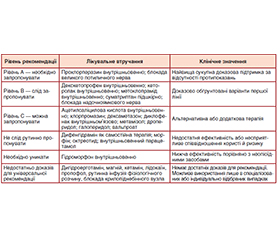
Актуальність. Мігрень є одним з найпоширеніших захворювань у практиці лікаря-невролога. Тяжкий напад мігрені та мігренозний статус належать до складних клінічних ситуацій у невідкладній неврології. Тому наявність науково обґрунтованих практичних підходів до допомоги таким пацієнтам є дуже важливою для клініциста. Мета: проаналізувати можливості інтеграції в щоденну клінічну практику в Україні сучасних підходів до лікування тяжких нападів мігрені й мігренозного статусу відповідно до нових міжнародних настанов, окремо проаналізувавши місце декскетопрофену в мультимодальній терапії. Матеріали та методи. Проведено цільовий наративний пошук у PubMed/MedLine та на офіційних ресурсах International Headache Society і American Headache Society. Проаналізовано клінічні настанови, систематичні огляди, метааналізи та рандомізовані контрольовані дослідження, опубліковані переважно у 2016–2026 роках. Особливу увагу приділено оновленій настанові American Headache Society 2025 року, опублікованій у 2026 році. Результати. При зверненні пацієнта з підозрою на тяжкий мігренозний напад чи мігренозний статус первинна оцінка має розпочинатися з підтвердження діагнозу та виключення вторинної причини головного болю. Накопичення об’єму досліджень при тяжких нападах мігрені у відділенні невідкладної допомоги призвело до формування нових рівнів рекомендацій для лікувальних методик. Внутрішньовенний прохлорперазин і блокада великого потиличного нерва отримали найвищий рівень рекомендації у дорослих із нападом мігрені, який потребує парентеральної терапії, у відділенні невідкладної допомоги (рівень A — необхідно запропонувати). Внутрішньовенні метоклопрамід, декскетопрофен і кеторолак, підшкірний суматриптан та блокада надочноямкового нерва також рекомендовані за відповідних клінічних умов (рівень B — слід запропонувати). Альтернативна або додаткова терапія (рівень C — можна запропонувати): ацетилсаліцилова кислота внутрішньовенно, хлорпромазин, дексаметазон, диклофенак внутрішньом’язово, метамізол, дроперидол, галоперидол, вальпроат. З огляду на рівень рекомендації і доступність зазначених вище лікувальних втручань в Україні, внутрішньовенні метоклопрамід, декскетопрофен і кеторолак становлять важливу частину доступного в Україні арсеналу. Блокади нервів є лікувальними втручаннями, доступність яких може зрости зі збільшенням кількості лікарів, що володіють цією методикою. Проте при виборі лікувальних методик завжди в центрі повинен залишатися пацієнт і його характеристики та потреби, що робить наявність препаратів з рівнем рекомендації C цінною опцією при індивідуальному підході до лікування пацієнта. Цінним доповненням до вже існуючого арсеналу для українського лікаря міг би стати підшкірний суматриптан як препарат з відмінним від доступних на сьогодні ліків механізмом дії і способом введення. Доказова база лікування мігренозного статусу значно слабша, ніж доказова база гострого тяжкого нападу. Тому доказову базу гострого тяжкого нападу не можна повністю переносити на мігренозний статус. Внутрішньовенний декскетопрофен забезпечує швидке зниження інтенсивності болю, може бути компонентом мультимодальної аналгезії, наприклад раціонально поєднуватися з метоклопрамідом. Дексаметазон не є основним препаратом для швидкого припинення болю. Його головне призначення — зниження ризику повернення помірного або тяжкого головного болю. Рутинне застосування парентеральних опіоїдів не рекомендується, а внутрішньовенний гідроморфон не слід застосовувати у типових пацієнтів із мігренню у відділенні невідкладної допомоги. Висновки. Лікування тяжкого нападу мігрені має бути раннім, етапним і мультимодальним. Декскетопрофен є доказово обґрунтованим швидкодіючим неопіоїдним засобом парентеральної терапії. При мігренозному статусі його слід розглядати як компонент комплексного протоколу, а не як універсальну монотерапію.
Background. Migraine is one of the most common neurological disorders encountered in clinical practice. Severe migraine attacks and status migrainosus represent challenging clinical situations in emergency neurology. Therefore, the availability of evidence-based and clinically applicable approaches to the management of these patients is of major importance to clinicians. The purpose was to analyze the feasibility of integrating contemporary approaches to the management of severe migraine attacks and status migrainosus into routine clinical practice in Ukraine in accordance with current international guidelines, with particular emphasis on the role of dexketoprofen in multimodal therapy. Materials and methods. A targeted narrative search was conducted in PubMed/MEDLINE and on the official resources of the International Headache Society and the American Headache Society. Clinical guidelines, systematic reviews, meta-analyses, and randomized controlled trials published predominantly between 2016 and 2026 were reviewed. Particular attention was paid to the updated American Headache Society guideline issued in 2025 and published in 2026. Results. In patients presenting with suspected severe migraine attacks or status migrainosus, the initial assessment should begin with confirmation of the diagnosis and exclusion of secondary causes of headache. The growing body of evidence on the treatment of severe migraine attacks in the emergency department has led to the establishment of updated levels of recommendation for therapeutic interventions. Intravenous prochlorperazine and greater occipital nerve block received the highest level of recommendation in adults with migraine attacks requiring parenteral therapy in the emergency department (level A — must offer). Intravenous metoclopramide, dexketoprofen, and ketorolac, subcutaneous sumatriptan, and supraorbital nerve block are also recommended when clinically appropriate (level B — should offer). Alternative or adjunctive therapies (level C — may offer) include intravenous acetylsalicylic acid, chlorpromazine, dexamethasone, intramuscular diclofenac, metamizole, droperidol, haloperidol, and valproate. Considering the level of recommendation and the availability of these therapeutic interventions in Ukraine, intravenous metoclopramide, dexketoprofen, and ketorolac constitute an important component of the therapeutic arsenal currently available in Ukraine. Nerve blocks are therapeutic interventions whose availability may increase as more physicians acquire the relevant procedural skills. Nevertheless, treatment selection should remain patient-centered and take into account individual patient characteristics and needs, making level C therapies valuable options when an individualized treatment approach is required. Subcutaneous sumatriptan could represent a valuable addition to the therapeutic arsenal available to Ukrainian clinicians because of its distinct mechanism of action and route of administration compared to currently available medications. The evidence base for the treatment of status migrainosus is considerably less robust than that for acute severe attacks. Therefore, evidence derived from studies of acute severe migraine attacks should not be directly extrapolated to status migrainosus. Intravenous dexketoprofen provides rapid reduction in pain intensity and may be incorporated into multimodal analgesia, for example, in combination with metoclopramide when clinically appropriate. Dexamethasone is not a primary treatment for rapid pain relief; its principal role is to reduce the risk of recurrence of moderate or severe headache. Routine use of parenteral opioids is not recommended, and intravenous hydromorphone should not be offered for typical emergency department patients with migraine. Conclusions. The treatment of severe migraine attacks must be initiated early and should follow a stepwise, multimodal approach. Dexketoprofen is an evidence-based, rapidly acting non-opioid agent for parenteral therapy. In status migrainosus, it should be considered as a component of a comprehensive treatment protocol rather than as universal monotherapy.
мігрень; тяжкий напад мігрені; мігренозний статус; декскетопрофен; невідкладна допомога; нестероїдні протизапальні препарати
migraine; severe migraine attack; status migrainosus; dexketoprofen; emergency care; nonsteroidal anti-inflammatory drugs
Вступ
Матеріали та методи
Результати та обговорення
/10.jpg)
/11.jpg)
/14.jpg)
- Headache Classification Committee of the Internatio–nal Headache Society. The International Classification of Hea–dache Disorders, 3rd edition. Cephalalgia. 2018;38(1):1-211. doi: 10.1177/0333102417738202.
- Puledda F, Sacco S, Diener HC, Ashina M, Al-Khazali HM, Ashina S, et al. International Headache Society global practice recommendations for the acute pharmacological treatment of migraine. Cephalalgia. 2024;44(8):3331024241252666. doi: 10.1177/03331024241252666.
- Robblee J, Minen MT, Friedman BW, Cortel-LeBlanc MA, Cortel-LeBlanc A, Orr SL. 2025 guideline update to acute treatment of migraine for adults in the emergency department: the American Hea–dache Society evidence assessment of parenteral pharmacotherapies and nerve blocks. Headache. 2026;66(1):53-76. doi: 10.1111/head.70016.
- Orr SL, Friedman BW, Christie S, Minen MT, Bamford C, Kelley NE, et al. Management of adults with acute migraine in the emergency department: the American Headache Society evidence assessment of parenteral pharmacotherapies. Headache. 2016;56(6):911-940. doi: 10.1111/head.12835.
- Kamourieh S, Rozen T, Anderson JM. Status migrainosus. Handb Clin Neurol. 2024;199:413-439. doi: 10.1016/B978-0-12-823357-3.00017-3.
- Mayers M, Wogayehu J, Ailani J. Status migrainosus: a narrative review. Curr Neurol Neurosci Rep. 2025;25(1):53. doi: 10.1007/s11910-025-01437-3.
- Robblee J, Smith JH, Ahmad S, Geiser R, Ali A. Redefining status migrainosus: a narrative review. Headache. 2026;66(5):1117-1127. doi: 10.1111/head.70075.
- Robblee J, Orlova YY, Ahn AH, Ali AS, Birlea M, Charleston L 4th, et al. Real-world approaches to outpatient treatment of status migrainosus: a survey study. Headache. 2024;64(8):1040-1048. doi: 10.1111/head.14769.
- Eigenbrodt AK, Ashina H, Khan S, Diener HC, Mitsikostas DD, Sinclair AJ, et al. Diagnosis and management of migraine in ten steps. Nat Rev Neurol. 2021;17(8):501-514. doi: 10.1038/s41582-021-00509-5.
- Ferrari MD, Goadsby PJ, Burstein R, Kurth T, Ayata C, Charles A, et al. Migraine. Nat Rev Dis Primers. 2022;8(1):2. doi: 10.1038/s41572-021-00328-4.
- Goadsby PJ, Holland PR, Martins-Oliveira M, Hoffmann J, Schankin C, Akerman S. Pathophysiology of migraine: a disorder of sensory processing. Physiol Rev. 2017;97(2):553-622. doi: 10.1152/physrev.00034.2015.
- Charles A. The pathophysiology of migraine: implications for clinical management. Lancet Neurol. 2018;17(2):174-182. doi: 10.1016/S1474-4422(17)30435-0.
- Do TP, Remmers A, Schytz HW, Schankin C, Nelson SE, Obermann M, et al. Red and orange flags for secondary headaches in clinical practice: SNNOOP10 list. Neurology. 2019;92(3):134-144. doi: 10.1212/WNL.0000000000006697.
- Godwin SA, Cherkas DS, Panagos PD, Shih RD, Byyny R, Wolf SJ. Clinical policy: critical issues in the evaluation and mana–gement of adult patients presenting to the emergency department with acute headache. Ann Emerg Med. 2019;74(4). doi: 10.1016/j.annemergmed.2019.07.009.
- Friedman BW, Irizarry E, Solorzano C, Khankel N, Zapata J, Zias E, et al. Randomized study of IV prochlorperazine plus diphenhydramine versus IV hydromorphone for migraine. Neurology. 2017;89(20):2075-2082. doi: 10.1212/WNL.0000000000004642.
- Barbanoj MJ, Antonijoan RM, Gich I. Clinical pharmacokinetics of dexketoprofen. Clin Pharmacokinet. 2001;40(4):245-262. doi: 10.2165/00003088-200140040-00002.
- Barbanoj Rodríguez MJ, Antonijoan Arbós RM, Rico Amaro S. Dexketoprofen trometamol: clinical evidence supporting its role as a painkiller. Expert Rev Neurother. 2008;8(11):1625-1640. doi: 10.1586/14737175.8.11.1625.
- Gungor F, Akyol KC, Kesapli M, Celik A, Karaca A, Bozdemir MN, et al. Intravenous dexketoprofen versus placebo for migraine attack in the emergency department: a randomized, placebo-controlled trial. Cephalalgia. 2016;36(2):179-184. doi: 10.1177/0333102415584604.
- Yavuz E, Gulacti U, Lok U, Turgut K. Intravenous metoclopramide versus dexketoprofen trometamol versus metoclopramide plus dexketoprofen trometamol in acute migraine attack in the emergency department: a randomized double-blind controlled trial. Am J Emerg Med. 2020;38(11):2254-2258. doi: 10.1016/j.ajem.2020.04.038.
- Turkcuer I, Serinken M, Eken C, Yilmaz A, Akdag O, Uyan E, et al. Intravenous paracetamol versus dexketoprofen in acute migraine attack in the emergency department: a randomised clinical trial. Emerg Med J. 2014;31(3):182-185. doi: 10.1136/emermed-2013-203044.
- Mainardi F, Maggioni F, Pezzola D, Zava D, Zanchin G. Dexketoprofen trometamol in the acute treatment of migraine attack: a phase II, randomized, double-blind, crossover, placebo-controlled, dose optimization study. J Pain. 2014;15(4):388-394. doi: 10.1016/j.jpain.2013.12.006.
- Tullo V, Valguarnera F, Barbanti P, Cortelli P, Sette G, Allais G, et al. Comparison of frovatriptan plus dexketoprofen 25 mg or 37.5 mg with frovatriptan alone in the treatment of migraine attacks with or without aura: a randomized study. Cephalalgia. 2014;34(6):434-445. doi: 10.1177/0333102413515342.
- Yang B, Xu Z, Chen L, Chen X, Xie Y. The efficacy of dexketoprofen for migraine attack: a meta-analysis of randomized controlled studies. Medicine (Baltimore). 2019;98(46). doi: 10.1097/MD.0000000000017734.
- Nurathirah MN, Yazid MB, Norhayati MN, Baharuddin KA, Abu Bakar MA. Efficacy of ketorolac in the treatment of acute migraine attack: a systematic review and meta-analysis. Acad Emerg Med. 2022;29(9):1118-1131. doi: 10.1111/acem.14457.
- Korucu O, Dagar S, Çorbacioglu K, Emektar E, Cevik Y. The effectiveness of greater occipital nerve blockade in treating acute migraine-related headaches in emergency departments. Acta Neurol Scand. 2018;138(3):212-218. doi: 10.1111/ane.12952.
- Singh A, Alter HJ, Zaia B. Does the addition of dexamethasone to standard therapy for acute migraine headache decrease the incidence of recurrent headache for patients treated in the emergency department? A meta-analysis and systematic review. Acad Emerg Med. 2008;15(12):1223-1233. doi: 10.1111/j.1553-2712.2008.00283.x.
- Colman I, Friedman BW, Brown MD, Innes GD, Grafstein E, Roberts TE, et al. Parenteral dexamethasone for acute severe migraine headache: meta-analysis of randomised controlled trials for preven–ting recurrence. BMJ. 2008;336(7657):1359-1361. doi: 10.1136/bmj.39566.806725.BE.
- Huang Y, Cai X, Song X, Tang H, Huang Y, Xie S, et al. Steroids for preventing recurrence of acute severe migraine headaches: a meta-analysis. Eur J Neurol. 2013;20(8):1184-1190. doi: 10.1111/ene.12155.
- Wang F, Zhang H, Wang L, Cao Y, He Q. Intravenous sodium valproate for acute migraine in the emergency department: a meta-analysis. Acta Neurol Scand. 2020;142(6):521-530. doi: 10.1111/ane.13325.
- Miller AC, Pfeffer BK, Lawson MR, Sewell KA, King AR, Zehtabchi S. Intravenous magnesium sulfate to treat acute headaches in the emergency department: a systematic review. Headache. 2019;59(10):1674-1686. doi: 10.1111/head.13648.
- Croop R, Goadsby PJ, Stock DA, Conway CM, Forshaw M, Stock EG, et al. Efficacy, safety, and tolerability of rimegepant orally disintegrating tablet for the acute treatment of migraine: a randomised, phase 3, double-blind, placebo-controlled trial. Lancet. 2019;394(10200):737-745. doi: 10.1016/S0140-6736(19)31606-X.
- Lipton RB, Croop R, Stock EG, Stock DA, Morris BA, Frost M, et al. Rimegepant, an oral calcitonin gene-related peptide receptor antagonist, for migraine. N Engl J Med. 2019;381(2):142-149. doi: 10.1056/NEJMoa1811090.
- Dodick DW, Lipton RB, Ailani J, Lu K, Finnegan M, Trugman JM, et al. Ubrogepant for the treatment of migraine. N Engl J Med. 2019;381(23):2230-2241. doi: 10.1056/NEJMoa1813049.
- Kuca B, Silberstein SD, Wietecha L, Berg PH, Dozier G, Lipton RB; COL MIG-301 Study Group. Lasmiditan is an effective acute treatment for migraine: a phase 3 randomized study. Neurology. 2018;91(24). doi: 10.1212/WNL.0000000000006641.
- Winner PK, McAllister P, Chakhava G, Ailani J, Ettrup A, Krog Josiassen M, et al. Effects of intravenous eptinezumab versus placebo on headache pain and most bothersome symptom when initiated during a migraine attack: a randomized clinical trial. JAMA. 2021;325(23):2348-2356. doi: 10.1001/jama.2021.7665.
- Charles AC, Digre KB, Goadsby PJ, Robbins MS, Hershey A; American Headache Society. Calcitonin gene-related peptide-targe–ting therapies are a first-line option for the prevention of migraine: an American Headache Society position statement update. Headache. 2024;64(4):333-341. doi: 10.1111/head.14692.
- Negro A, Spuntarelli V, Sciattella P, et al. Rapid referral for headache management from emergency department to headache centre: four years data. J Headache Pain. 2020;21:25. https://doi.org/10.1186/s10194-020-01094-6.