
Інформація призначена тільки для фахівців сфери охорони здоров'я, осіб,
які мають вищу або середню спеціальну медичну освіту.

Підтвердіть, що Ви є фахівцем у сфері охорони здоров'я.

Журнал "Гастроэнтерология" Том 57, №3, 2023

Вернуться к номеру

Рівень панкреатичної фекальної еластази-1 та ризик кардіоваскулярних ускладнень у пацієнтів із хронічним панкреатитом, поєднаним з артеріальною гіпертензією
Авторы: A.Yu. Filippova, V.V. Kryvoshei
Dnipro State Medical University, Dnipro, Ukraine

Рубрики: Гастроэнтерология

Разделы: Клинические исследования

Версия для печати


Резюме

Актуальність. Хронічний панкреатит та мальнутриція асоціюються із серцево-судинними захворюваннями й серцево-судинними подіями. Водночас роль зовнішньосекреторної недостатності підшлункової залози як фактора ризику серцево-судинних подій невідома. Мета дослідження: оцінити рівень панкреатичної фекальної еластази-1 у пацієнтів із хронічним панкреатитом, поєднаним з артеріальною гіпертензією, та визначити взаємозв’язок із кардіоваскулярним ризиком. Матеріали та методи. У дослідження було включено 110 хворих із хронічним панкреатитом: 46 чоловіків та 64 жінки віком 45–65 років. Першу групу становили особи з поєднаним перебігом хронічного панкреатиту та артеріальної гіпертензії, другу — пацієнти тільки з хронічним панкреатитом. В усіх хворих визначали вміст загального холестерину, тригліцеридів (ТГ), холестерину ліпопротеїнів високої (ХС ЛПВЩ), низької (ХС ЛПНЩ) та дуже низької щільності, панкреатичної фекальної еластази-1, загального білка, сироваткові рівні альбуміну, заліза, вітаміну D, цинку та магнію. Результати. У 1 групі було вірогідно більше випадків тяжкої зовнішньосекреторної недостатності підшлункової залози та менше хворих iз нормальним рівнем панкреатичної фекальної еластази-1 (р < 0,05). Також у цій групі дуже високий серцево-судинний ризик реєстрували вірогідно частіше — в 11,5 % випадків (р < 0,05). Окрім артеріальної гіпертензії, одними з основних факторів кардіоваскулярного ризику в пацієнтів із хронічним панкреатитом були ожиріння та збільшена маса тіла (70,9 %). Підвищені рівні ТГ, ХС ЛПНЩ та загального холестерину відмічалися відповідно у 86,4; 94,5 та 91,8 % хворих на хронічний панкреатит, поєд­наний із артеріальною гіпертензією, а зниження рівня ХС ЛПВЩ — у 34,5 % (р < 0,05). Пацієнти 1 групи мали вірогідно вищі показники ТГ, ЛПНЩ, загального холестерину та нижчий рівень ЛПВЩ порівняно з 2 групою (р < 0,05). Установлено вірогідну зворотну кореляцію між рівнем панкреатичної фекальної еластази-1 та вмістом ТГ, коефіцієнтом атерогенності, показником за шкалою SCORE2 (r = –0,43, р < 0,05; r = –0,52, р < 0,05; r = –0,48, р < 0,05 відповідно) у пацієнтів 1 групи, а також вірогідний прямий зв’язок із рівнем ЛПВЩ (r = 0,50; р < 0,05). Висновки. Поєднаний перебіг хронічного панкреатиту із зовнішньосекреторною недостатністю підшлункової залози та артеріальної гіпертензії асоціюється із підвищеним кардіоваскулярним ризиком. Зниження рівня панкреатичної фекальної еластази-1 та мальнутриція можуть бути пов’язаними зі збільшенням частоти дисліпідемій та зростанням ризику серцево-судинних подій у цієї категорії хворих.

Background. Chronic pancreatitis and malnutrition are associated with cardiovascular diseases and cardiovascular events, while the role of exocrine pancreatic insufficiency as a risk factor for cardiovascular events is unknown. The purpose of the study was to evaluate the level of pancreatic fecal elastase-1 in patients with chronic pancreatitis combined with hypertension and to determine the relationship with cardiovascular risk. Materials and methods. One hundred and ten patients (46 men, 64 women) aged 45–65 years with chronic pancreatitis were included in the study. The first group consisted of people with a combined course of chronic pancreatitis and hypertension; the second — with chronic pancreatitis alone. The levels of total cholesterol, triglycerides (TG), high-density lipoprotein cholesterol (HDL-C), low-density lipoprotein cholesterol (LDL-C), and very low-density cholesterol, pancreatic fecal elastase-1, total protein, serum content of albumin, iron, vitamin D, zinc and magnesium were evaluated in all patients. Results. In the group 1, there were significantly more cases of severe exocrine pancreatic insufficiency and a significantly lower number of patients with a normal level of pancreatic fecal elastase-1 (p < 0.05). In addition, a very high cardiovascular risk was detected significantly more often in this group — 11.5 % (p < 0.05). The main cardiovascular risk factors among patients with chronic pancreatitis, in addition to hypertension, included obesity and increased body weight — 70.9 % of cases. Elevated levels of TG, LDL, and total cholesterol were observed in 86.4, 94.5, and 91.8 % of patients with chronic pancreatitis combined with hypertension, respectively, and a reduced content of HDL-C was found in 34.5 % (p < 0.05). Significantly higher levels of TG, LDL-C, total cholesterol, and a lower level of HDL were revealed in the group 1 compared to the group 2 (p < 0.05). In patients of the group 1, a reliable inverse correlation was found between the pancreatic fecal elastase-1 and TG, atherogenic index, the SCORE2 scale (r = –0.43, p < 0.05; r = –0.52, p < 0.05; r = –0.48, p < 0.05, respectively), as well as a reliable direct correlation with HDL level (r = 0.50; p < 0.05). Conclusions. The combined course of chronic pancreatitis with exocrine pancreatic insufficiency and hypertension is associated with an increased cardiovascular risk. A decrease in the level of pancreatic fecal elastase-1 and malnutrition may be associated with an increase in the frequency of dyslipidemia and in the risk of cardiovascular events among these patients.


Ключевые слова

кардіоваскулярний ризик; зовнішньосекреторна недостатність підшлункової залози; мальнутриція

cardiovascular risk; exocrine pancreatic insufficiency; malnutrition

Introduction

Chronic pancreatitis (CP) is a condition associated with significant morbidity and mortality [1, 2]. According to modern literature, long-term inflammation leads to the destruction of pancreatic parenchyma and development of its fibrosis [3]. In turn, this causes an irreversible loss of exocrine function, which manifests in the form of impaired synthesis and secretion of pancreatic enzymes, as well as impaired endocrine function [4]. Thus, common secondary consequences of CP are exocrine pancreatic insufficiency (EPI) and pancreatogenic diabetes mellitus [1, 2, 5, 6]. EPI further leads to digestive disorders in the form of malabsorption of fats, proteins, and fat-soluble vitamins, which ultimately cause nutrient deficiencies [7, 8]. It is estimated that approximately 35–50 % of patients with CP will develop EPI within 10–15 years after disease onset, and pancreatic enzyme replacement therapy is required to restore normal nutritional status [2, 5, 9].
There is evidence that CP is associated with an increased risk of cardiovascular diseases, which may be explained by common risk factors (e.g., smoking, diabetes mellitus) [10, 11]. Nutritional deficiency and malnutrition have also been associated with cardiovascular diseases and cardiovascular events, but the role of EPI as a risk factor for the latter is unknown [12–17]. A recent EPNAT-CP study on the etio–logy, pathogenesis, and natural course of CP demonstrated that EPI is significantly associated with increased mortality in patients with CP [18]. The authors hypothesized that EPI may cause an increased risk of cardiovascular events in the same population.
Another prospective cohort study showed that arterial hypertension (AH) was one of the most common cardiovascular risk factors in patients with CP and EPI [29]. Concomitant hypertension in CP leads to a decrease in the quality of life and an increase in the frequency of detection of dyslipidemias and manifestations of malnutrition [25, 30].
According to modern literary data, malnutrition is a common condition among patients with cardiovascular diseases and is an important risk factor for morbidity and mortality [26]. Ischemia and stagnation in peripheral tissues caused by chronic heart failure (HF) can lead to dysfunction of many organs, which can be a potential cause of loss of appetite [27]. A recent study showed that the level of pancreatic fecal elastase-1 (PFE-1) was significantly lower in patients with acute decompensated HF [28]. This may indicate the expediency of determining EPI in the diagnosis of malnutrition in HF, while the relationship between PFE-1 and existing hypertension has not been clarified.
The purpose of the present study was to evaluate the level of PFE-1 in patients with CP combined with AH and to determine the relationship with cardiovascular risk.

Materials and methods

The study was conducted with approval from the local ethics committee according to the principles outlined in the Declaration of Helsinki. Written informed consent was obtained from all participants of the presented study. One hundred and ten patients (46 men, 64 women) aged 45–65 years (median of 53.7 [45.4; 64.2] years) with CP were examined.
The diagnosis of CP was made based on anamnestic data, clinical manifestations, and the results of laboratory and instrumental studies, taking into account the United European Gastroenterology evidence-based guidelines for the diagnosis and therapy of chronic pancreatitis [31]. The diagnosis of hypertension was made according to the recommendations of the Ukrainian Association of Cardiologists (2016), clinical guidelines of the European Society of Hypertension and the European Society of Cardiology [32]. The inclusion criteria were the presence of a verified diagnosis of hypertension, a diagnosis of CP, stable CP therapy for at least 6 months and unchanged antihypertensive therapy for 3 months, age of 45–65 years, voluntary informed consent to participate in the study. Exclusion criteria were an established and verified diagnosis of coronary heart disease, acute pancreatitis, stage III and degree III hypertension, previous therapy with hypolipidemic drugs, chronic heart failure of the IV functional class, diabetes, hypothyroidism, glomerular filtration rate < 60 ml/min/1.73 m2, class 4 obesity.
All patients with CP received standard therapy including pancreatin preparations in the form of mini-microspheres and mini-tablets. At the same time, all patients with hypertension received stably selected, unchanged (during the last three months) antihypertensive therapy prescribed by a cardiologist: 49 (70 %) patients received angiotensin-converting enzyme inhibitors/blockers, 40 (57.1 %) — calcium channel antagonists, 28 (40 %) — diuretics, 17 (24.3 %) — beta blockers [22, 24].
Patients were divided into 2 group: the first one (n = 70) — people with a combined course of CP and AH; the second one (n = 40) — patients with CP without concomitant AH. At baseline, patients of groups 1 and 2 were comparable in terms of age, gender structure, body mass index, duration of CP and its course, administered therapy. The median systolic and diastolic blood pressure in group 1 was 138.5 [125.8; 144.6] and 75.6 [71.4; 78.3] mm Hg, respectively, in group 2 — 128.4 [114.2; 138.5] and 71.1 [68.2; 73.7] mm Hg.
The total risk of cardiovascular complications was assessed according to the SCORE2 scale [33]. The risk of fatal and nonfatal complications was considered low if it was < 5 %, high if it was between 5 and 10 %, and very high if it was > 10 %.
The serum content of total cholesterol (TC) and trigly–cerides (TG) was determined by the enzyme-linked immunosorbent assay (ELISA) using sets of colorimetric tests (HUMAN, Germany) on the biochemical RT-1904C Chemistry Analyzer; high-density lipoprotein cholesterol (HDL-C) was measured by an immunoenzymatic method based on Cholesterol Liquicolor test kit (HUMAN, Germany). The level of low- (LDL-C) and very low-density lipoprotein cholesterol (VLDL-C) was calculated according to generally accepted formulas [23]. Semiquantitative determination of C-reactive protein level in undiluted serum was performed by the latex agglutination test with the help of HumaTex kits (HUMAN, Germany).
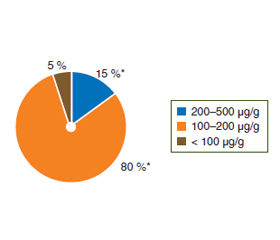
The level of PFE-1 was determined using ELISA kits (Chebo® • Biotech AG, Germany). A result of 200 μg/g or more was considered as normal, 100–200 μg/g — as mode–rate and mild EPI, < 100 μg/g — as severe pancreatic insufficiency.
To assess the nutritional status, the levels of total protein, serum albumin, serum iron and vitamin D, serum zinc and magnesium levels were evaluated [19]. Most patients (54.3 %) with a combined course of CP and AH had signs of malnutrition according to the results of laboratory tests.
Data processing and analysis were performed –using Libre Office and Statistica software (license No. AGAR909E415822FA). More than 50 % of the data had a different than normal type of distribution according to the Shapiro-Wilk test, so the analysis used non-parametric statistics, the data were described as the median and 25 and 75 quartiles. When comparing quantitative indicators, the Mann-Whitney test was used; Pearson’s chi-square test (χ2) was used to compare qualitative indicators. Correlation analysis was performed using the non-parametric Spearman correlation coefficient (ρ). The trend lines on the charts correspond to the linear regression lines. The level of p < 0.05 is taken as significant for statistical hypotheses.

Results

In patients with a combined course of CP and AH, the median PFE-1 level was 156 [114.25; 211.51] μg/g, in patients with isolated CP — 177 [150.22; 236.89] μg/g (p < 0.05). Patients with moderate and mild EPI prevailed in groups 1 and 2 (Fig. 1, 2), while significantly higher frequency of severe EPI was found in group 1 (p < 0.05).
The median cardiovascular risk according to the SCORE2 scale in patients with CP associated with AH was 3.8 [2.4; 5.2] %, in the comparison group — 3.1 [2.0; 4.9] %, p > 0.05. At the same time, the number of patients at a very high cardiovascular risk was significantly higher in the first group (p < 0.05) (Fig. 3). A significant inverse correlation was found between the SCORE2 indicator in patients of group 1 and the level of PFE-1 (r = –0.48; p < 0.05), serum iron (r = –0.36; p < 0.05), magnesium (r = –0.40; p < 0.05) and albumin (r = –0.38; p < 0.05).
The main cardiovascular risk factors among patients with CP, in addition to hypertension, included obesity and increased body weight. Most patients in group 1 had excess body weight and obesity: normal body weight was determined in 32 (29.1 %) of cases, excessive — in 35 (31.8 %), class 1 obesity — in 26 (23.6 %), class 2 — in 17 (15.5 %). The median body mass index in patients with CP combined with hypertension was 30 [25.3; 36.8] kg/m2.
64.5 % of patients with CP smoked, and this indicator did not differ significantly between groups 1 and 2 — 64.3 and 65 % of smokers, respectively. Increased levels of TG, LDL-C, and TC were noted in 86.4, 94.5, and 91.8 % of patients with CP and hypertension, respectively, a reduced level of HDL-C was found in 34.5 % of cases, differences of these indicators between groups were significant (p < 0.05). Patients of group 1 had significantly higher levels of TG, LDL-C, and TC and a lower level of HDL compared to the group 2 (Table 1) (p < 0.05).
It was found that patients with CP and reduced PFE-1 had a significantly higher level of TG, atherogenic index, and a significantly lower content of HDL-C (Table 1) (p < 0.05). At the same time, it should be noted that these differences were more significant in patients with concomitant AH. A significant inverse correlation was found between the PFE-1 and TG levels, atherogenic index, the indicator on the SCORE2 scale in patients of group 1: r = –0.43, p < 0.05; r = –0.52, p < 0.05; r = –0.48, p < 0.05, respectively, as well as a significant direct correlation — with HDL-C level: r = 0.50, p < 0.05. A significant direct correlation was also noted between HDL-C and serum iron (r = 0.39; p < 0.05), magnesium levels (r = 0.38; p < 0.05) in group 1.

Discussion

Thus, the obtained results indicate that in patients with a combined course of CP and AH, there is a shift in the structure of cardiovascular risk towards its very high level, which requires a detailed analysis of traditional factors and the search for new markers of atherosclerotic damage to vessels in these patients. The study results demonstrated that EPI is a factor significantly associated with an increased risk of cardiovascular events in patients with CP combined with AH. The current results correspond to the data obtained by Daniel de la Iglesia et al. in the conducted cohort study [29]. The incidence of dyslipi–demia in it was 43.3 % and the incidence of AH was 19.4 %, patients with diabetes were not an exclusion criterion. The difference of our study is the inclusion of patients with the combined course of CP and AH in the absence of diabetes, while the frequency of dyslipidemia was significantly higher — 94.5 %. It should be noted that both studies support the effect of malnutrition on increasing level of cardiovascular risk. This corresponds to existing data on the role of hypoalbuminemia, as well as a decrease in the serum levels of magnesium and zinc with the development of vascular diseases [11, 20, 29, 35]. The significant correlations found in current study demonstrated the role of EPI, malnutrition in lowering the level of HDL-C and increasing the level of TG in patients with a combined course of CP and AH.
Recent cohort studies have demonstrated that patients with CP have an increased risk of cerebrovascular diseases, acute coronary syndrome, deep vein thrombosis and pulmonary embolism [11, 28, 36]. The results of our study may indicate the role of EPI in an increased cardiovascular risk in CP combined with AH. Current literature data indicate a possible relationship between PFE-1 and malnutrition in patients with chronic HF [34]. Therefore, Xia T. et al. in their study [21] demonstrated an increase in the frequency of EPI among patients with HF. The authors concluded that chronic hypoxic pancreatic tissue damage caused by prolonged splanchnic hypoperfusion likely contributes to malnutrition and cachexia in chronic HF patients. On the other hand, CP and PFE-1 levels are independent risk factors associated with an increased risk of cardiovascular events. Therefore, further research in this direction is promising, in particular, determining the role of HF and loss of appetite in CP combined with AH.

Conclusions

1. Most patients (95.7 %) with a combined course of chronic pancreatitis and hypertension had exocrine pancreatic insufficiency and a decrease in the level of pancreatic fecal elastase-1, which is significantly higher than in the group of isolated chronic pancreatitis. Severe exocrine pancreatic insufficiency, as well as a lower frequency of normal exocrine pancreatic function were revealed significantly more often among patients with chronic pancreatitis and hypertension.
2. A very high cardiovascular risk (11.5 %) was detected significantly more frequently in patients with a combined course of chronic pancreatitis and hypertension. A significant increase in triglycerides and a decrease in LDL-C was found in them. A reliable inverse correlation was observed between cardiovascular risk level and indicators of pancreatic fecal elastase-1, serum iron, magnesium, and albumin.
 
Received 07.08.2023
Revised 19.08.2023
Accepted 28.08.2023

Список литературы

  1. Mortality, cancer, and comorbidities associated with chronic pancreatitis: a Danish nationwide matched-cohort study / U.C. Bang et al. Gastroenterology. 2014. Vol. 146. P. 989-994. doi: 10.1053/j.gastro.2013.12.033.
  2. Epidemiology of chronic pancreatitis: burden of the disease and consequences / P. Levy et al. United European Gastroenterology Journal. 2014. Vol. 2. P. 345-354. doi: 10.1177/2050640614548208.
  3. Pathophysiology of chronic pancreatitis / C. Brock, L.M. Nielsen, D. Lelic, A.M. Drewes. World Journal Gastroentero–logy. 2013. Vol. 19. P. 7231-7240. doi: 10.3748/wjg.v19.i42.7231.
  4. Keller J., Layer P. Human pancreatic exocrine response to nutrients in health and disease. Gut. 2005 Jul. Vol. 54 (Suppl. 6). P. 1-28. doi: 10.1136/gut.2005.065946.
  5. Dominguez-Munoz J.E. Pancreatic exocrine insufficiency: diagnosis and treatment. Journal Gastroenterology Hepatology. 2011. Vol. 26. Suppl. 2. P. 12-16. doi: 10.1111/j.1440-1746.2010.06600.x.
  6. Risk Factors for Diabetes Mellitus in Chronic Pancreatitis: A Cohort of 2,011 Patients / J. Pan et al. Medicine. (Baltimore). 2016. Vol. 95(14). P. e3251. doi: 10.1097/MD.0000000000003251.
  7. The prevalence of fat-soluble vitamin deficiencies and a decreased bone mass in patients with chronic pancreatitis / E.C.M. Sikkens et al. Pancreatology. 2013. Vol. 13. P. 238-242. doi: 10.1016/j.pan.2013.02.008.
  8. Serum nutritional markers for prediction of pancreatic exocrine insufficiency in chronic pancreatitis / B. Lindkvist et al. Journal Pancreatology. 2012. Vol. 12. P. 305-310. doi: 10.1016/j.pan.2012.04.006.
  9. Nutritional Therapy in Chronic Pancreatitis / J.E. Domínguez-Muñoz et al. Gastroenterology Clinical North America. 2018. Vol. 47. P. 95-106. doi: 10.1016/j.gtc.2017.09.004.
  10. Risk of acute atherosclerotic cardiovascular disease in patients with acute and chronic pancreatitis / L.C. Sung et al. Sci Rep. 2021. Vol. 11. P. 20907. doi: 10.1038/s41598-021-99915-4.
  11. Increased Risk of Acute Coronary Syndrome in Patients with Chronic Pancreatitis: A Nationwide Cohort Analysis / M.-T. Hsu et al. Medicine (Baltimore). 2016. Vol. 95. P. e3451. doi: 10.1097/MD.0000000000003451.
  12. Strong associations of 25-hydroxyvitamin D concentrations with all-cause, cardiovascular, cancer, and respiratory disease mortality in a large cohort study / B. Schottker et al. American Journal Clinical Nutrition. 2013. Vol. 97. P. 782-793. doi: 10.3945/ajcn.112.047712.
  13. Coronary heart disease after prenatal exposure to the Dutch famine / T.J. Roseboom et al. Heart. 2000. Vol. 84. P. 595-598. doi: 10.1136/heart.84.6.595.
  14. Serum 25-hydroxyvitamin D and incidence of fatal and nonfatal cardiovascular events: a prospective study with repeated measurements / L. Perna, B. Schottker, B. Holleczek, H.J. Brenner. Clinical Endocrinology Metabolism. 2013. Vol. 98. P. 4908-4915. doi: 10.1210/jc.2013-2424.
  15. Malnutrition-inflammation modifies the relationship of cholesterol with cardiovascular disease / G. Contreras et al. Journal American Society Nephrology. 2010. Vol. 21. P. 2131-2142. doi: 10.1681/ASN.2009121285.
  16. Vitamin D and cardiovascular disease risk / E.D. Michos, M.L. Melamed. Current Opinion Clinical Nutrition Metabolism Care. 2008. Vol. 11. P. 7-12. doi: 10.1097/MCO.0b013e3282f2f4dd.
  17. Protein malnutrition and hypoalbuminemia as predictors of vascular events and mortality in ESRD / B.A. Cooper, E.L. Penne, L.H. Bartlett, C.A. Pollock. American Journal Kidney Diseases. 2004. Vol. 43. P. 61-66. doi: 10.1053/j.ajkd.2003.08.045.
  18. Increased Risk of Mortality Associated with Pancreatic Exocrine Insufficiency in Patients with Chronic Pancreatitis / D. de la Iglesia-Garcia, N. Vallejo-Senra, J. Iglesias-Garcia, A. Lopez-Lopez, L. Nieto, J.E. Dominguez-Munoz. Journal Clinical Gastroenterology. 2017. Vol. 52(8). P. e63-e72. doi:10.1097/MCG.0000000000000917.
  19. Nutritional Laboratory Markers in Malnutrition / U. Keller. Journal Clinical Medicine. 2019. Vol. 8(6). P. 775. doi: 10.3390/jcm8060775.
  20. Verbrugge F.H., Dupont M., Steels P., Grieten L., Malbrain M. et al. Abdominal Contributions to Cardiorenal Dysfunction in Congestive Heart Failure. J. Am. Coll. Cardiol. 2013. Vol. 62. P. 485-495. doi: 10.1016/j.jacc.2013.04.070.
  21. Pancreatic exocrine insufficiency in patients with chronic heart failure and its possible association with appetite loss / T. Xia, X. Chai, J. Shen. PLoS One. 2017. Vol. 12(11). P. e0187804. doi: 10.1371/journal.pone.0187804.
  22. Effects of the lercanidipine-enalapril combination vs. the corresponding monotherapies on home blood pressure in hypertension: evidence from a large database / G. Mancia, S. Omboni, I. Chazova, A. Coca, X. Girerd et al.; FELT Study Group. Journal Hypertension. 2016. Vol. 34(1). P. 139-48. doi: 10.1097/HJH.0000000000000767.
  23. Kuryata O.V., Frolova Ye.O. Lipidnyy obmin i kardiovaskulyarnyy ryzyk u khvorykh na khronichnu khvorobu nyrok: monohra–fiya. Dnipropetrovska medychna akademiya MOZ Ukrayiny. Dnipropetrovsk: Herda; 2013. 112 р. (in Ukrainian).
  24. Renin-angiotensin system antagonists, glomerular filtration rate and blood pressure / D.D. Ivanov. Kidneys. 2018. Vol. 7(1). P. 6-10. doi: 10.22141/2307-1257.7.1.2018.122214.
  25. Filippova A.Yu., Löhr M., Kryvoshei V.V. Blood lipid spectrum and elastic properties of arteries in patients with chronic pancrea–titis in combination with arterial hypertension. Medicni perspektivi. 2022. Vol. 27(1). P. 42-49. doi: 10.26641/2307-0404.2022.1.254320.
  26. Malnutrition and Cachexia in Heart Failure / A. Rahman et al. JPEN Journal Parenteral Enteral Nutrition. 2016. Vol. 40(4). P. 475-86. doi: 10.1177/0148607114566854.
  27. Kemp C.D., Conte J.V. The pathophysiology of heart failure. Cardiovascular Pathology. 2012. Vol. 21(5). P. 365-71. doi: 10.1016/j.carpath.2011.11.007.
  28. Evaluation of malnutrition with blood ghrelin and fecal elastase levels in acute decompensated heart failure patients / M. Özcan et al. Turk Kardiyol Dern Ars. 2015. Vol. 43(2). P. 131-137. doi: 10.5543/tkda.2015.06606.
  29. Pancreatic exocrine insufficiency and cardiovascular risk in patients with chronic pancreatitis: a prospective, longitudinal cohort study / D. de la Iglesia et al. J Gastroenterol Hepatol. 2019. Vol. 34(1). P. 277-283. doi: 10.1111/jgh.14460.
  30. Filippova O.Yu., Kryvoshey V.V. Quality of life in chronic pancreatitis with accompanying arterial hypertension in age aspect and its relationship with malnutrition markers. Svit medytsyny ta biolohiyi. 2023. Vol. 2(84). P. 158-162. doi: 10.26724/2079-8334-2023-2-84-158-162.
  31. United European gastroenterology evidence-based guidelines for the diagnosis and therapy of chronic pancreatitis (HaPanEU) / J.M. Löhr et al. United European Gastroenterol J. 2017. Vol. 5. P. 153-99. doi: 10.1177/2050640616684695.
  32. 2018 ESC/ESH Guidelines for the management of arterial hypertension / B. Williams et al. Eur Heart J. 2018. Vol. 39(33). P. 3021-3104. doi: 10.1093/eurheartj/ehy339.
  33. 2021 ESC Guidelines on cardiovascular disease prevention in clinical practice / F.L.J. Visseren et al. Eur Heart J. 2021. Vol. 42(34). P. 3227-3337. doi: 10.1093/eurheartj/ehab484.
  34. Chronic pancreatitis and the heart disease: still terra incognita? / S. Nikolic et al. World J Gastroenterol. 2019. Vol. 25(44). P. 6561-6570. doi: 10.3748/wjg.v25.i44.6561.
  35. Chronic Pancreatitis Correlates with Increased Risk of Cerebrovascular Disease: A Retrospective Population-Based Cohort Study in Taiwan / T.S. Wong et al. Medicine (Baltimore). 2016. Vol. 95. e3266. doi: 10.1097/MD.0000000000003266.
  36. Exocrine pancreas insufficiency in chronic pancreatitis. Risk factors and associations with complications. A multicentre study of 1869 patients / F. Erchinger et al. Pancreatology. 2022. Vol. 22(3). P. 374-380. doi: 10.1016/j.pan.2022.02.003.

Вернуться к номеру